


From unhappy customers to costly rework and surprise issues, the daily struggle can feel never-ending.
As a business owner, you may think quality management is just an expensive headache meant for big companies.
That’s a BIG MYTH…
Setting up a quality management system (QMS) gives you a clear way to achieve steady quality, cut waste, and build a strong reputation.
While related to broader concepts like total quality management, this blog focuses on a practical starting point for MSMEs.
We have discussed seven steps to stop reacting to problems and start building a reliable, high-quality business through effective quality management.
For an MSME business owner, quality management means having a structured system to make sure your product or service always meets top standards without needing you to oversee every detail all the time.
A planned approach to quality isn’t a COST.
It is your strongest engine for growth, efficiency, and resilience. This is one of the core benefits of quality management.
By taking clear, doable steps, this cycle-based approach makes sure your improvements are based on facts and remain effective in the long run.
Good quality management relies on this continuous loop of feedback and action.
Let’s start with step 1.
Do you really know what your customers value?
The main part of any quality management strategy is putting your customers first.
Ignoring their feedback or when they stop giving it can hold you back.
Your first step is to listen in a structured way, aiming not just to meet expectations but to exceed them.
You don’t need a big budget for this.
Use simple but effective methods-
Google Forms lets you send short email surveys after a purchase.
These help you measure customer satisfaction (CSAT).
A quick call or planned chat with an important client can give you detailed insights.
Don’t underestimate how valuable these personal talks can be.
Keep an eye on Google reviews, social media mentions, and even what comes through support tickets, emails, or returned products.
Each one holds useful information.
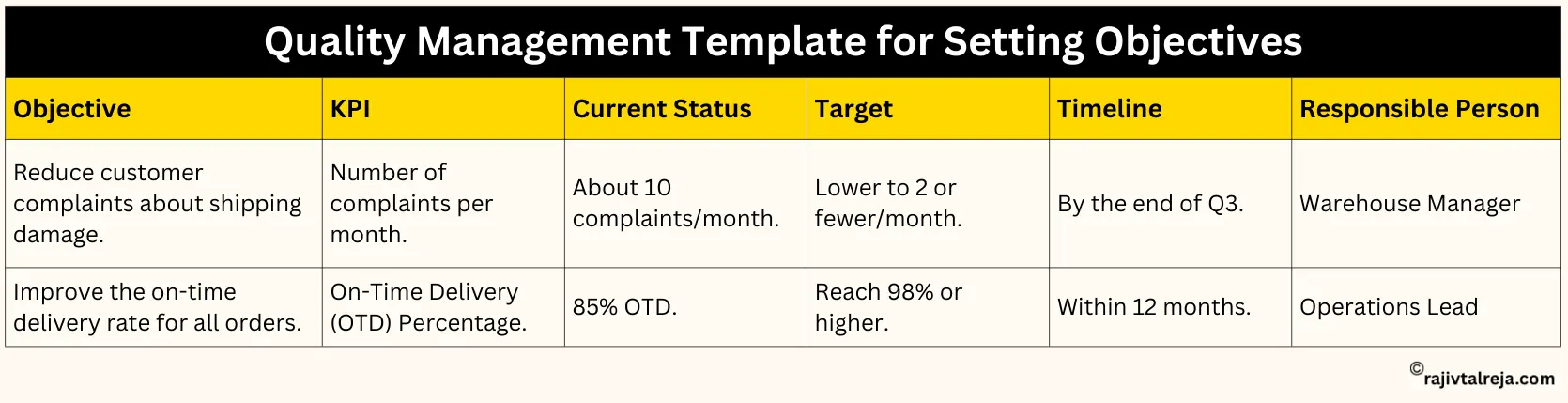
Once you have the feedback, convert it into SMART goals (Specific, Measurable, Achievable, Relevant, Time-bound).
In many MSME businesses, processes are not written down.
They live in the minds of employees who have been around the longest.
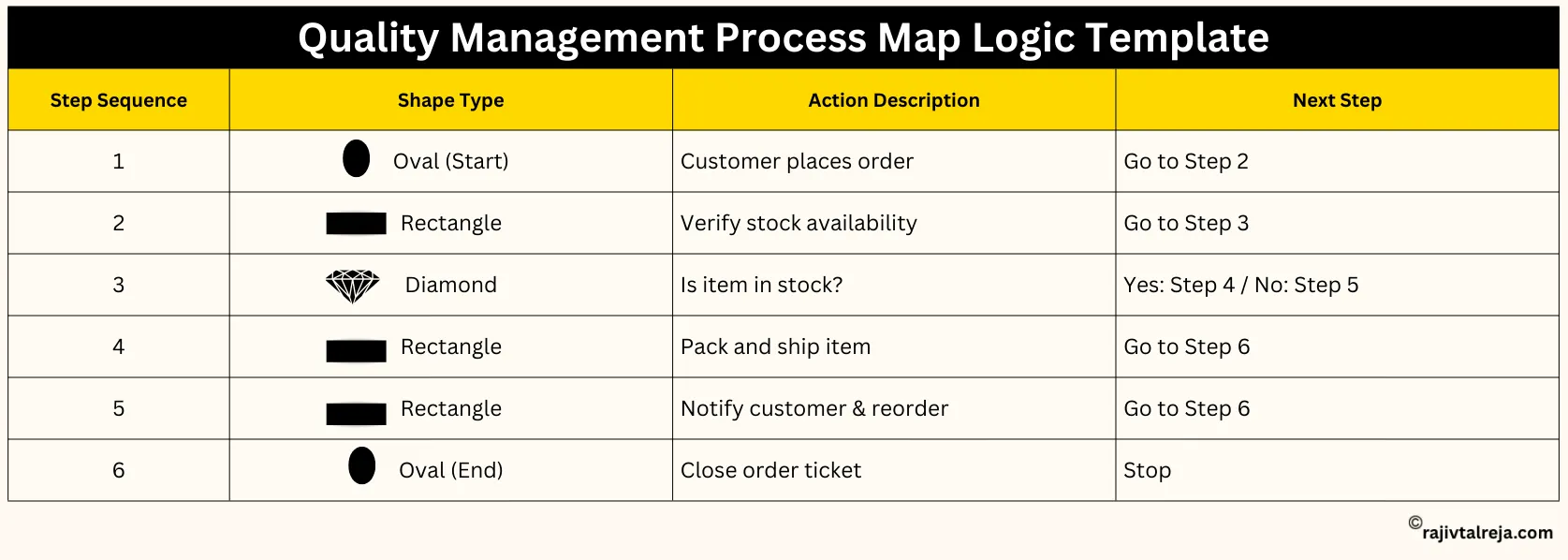
A process map, or flowchart, is a simple visual tool that makes these steps clear, helping you spot inefficiencies and delays that waste time and money.
Start with one key workflow, like Fulfilling an Online Order.
Involve the employees who actually do the work.
Their inputs ensure the map shows the reality, not guesses.
Write down every step, decision point, and handoff from beginning to end.
Use easy shapes (Ovals for Start/End, Rectangles for Tasks, Diamonds for Decisions) to make a clear visual.
Always start with the “As-Is” (current, flawed) process.
| Mapping your process is a great start. But just mapping is not enough. To turn that map into a scalable engine, you need a business coach to guide your next moves. |
You need to measure before you can make improvements.
Once you know what customers expect and have your processes mapped, the next step is to use data to uncover what’s really causing the issues.
These quality improvement methods are crucial for success.
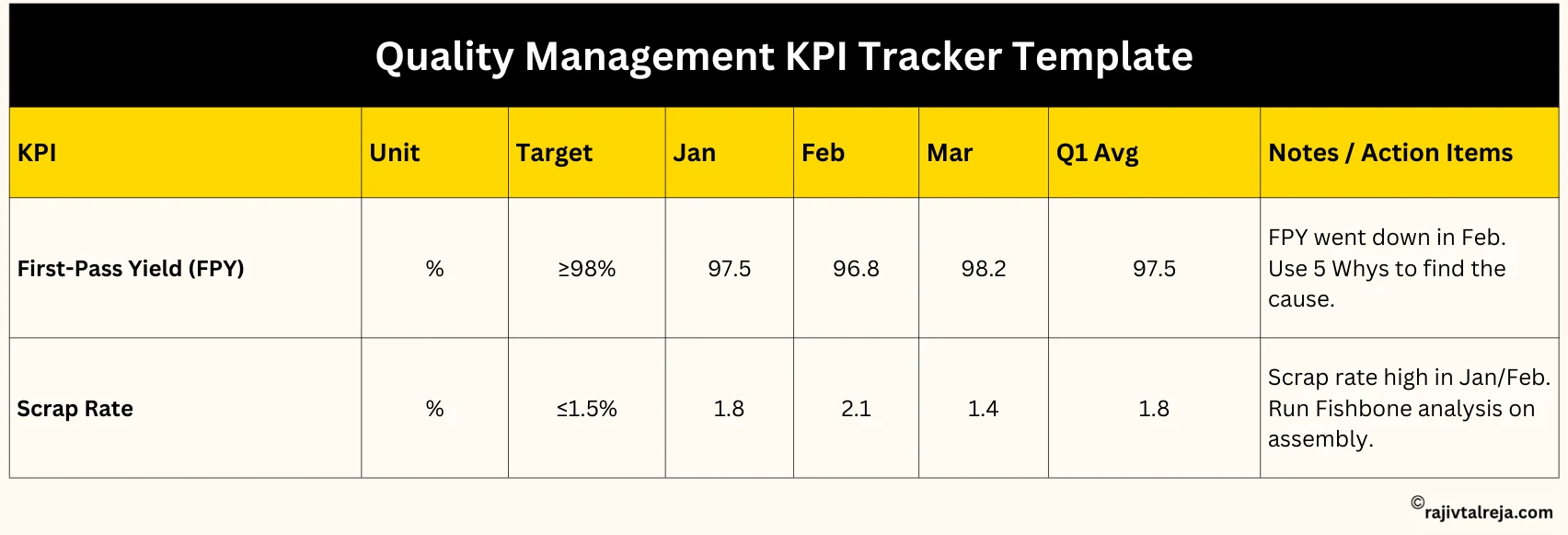
Monitor measurable numbers that show how well your processes are working-
Shows the percentage of products made right the first time (no fixes needed).
Formula- FPY = (Total units produced / Units passing on first attempt) x 100
Tells you how much material and production is wasted.
Direct feedback on the quality of your product or service.
When a KPI is not meeting the target, use simple tools to find the real problem, not just the surface issue-
Keep asking “Why?” (about five times) until you get to the root cause.
Example-
Why did the machine stop? > The fuse blew. > Why did the fuse blow? > Because…
A simple chart to list and group possible reasons for a problem (like People, Methods, Machines, Materials).
The table below serves as a practical quality management example of how to track these metrics.
Quality starts with consistency.
Once you improve a process, the next step is to standardise it.
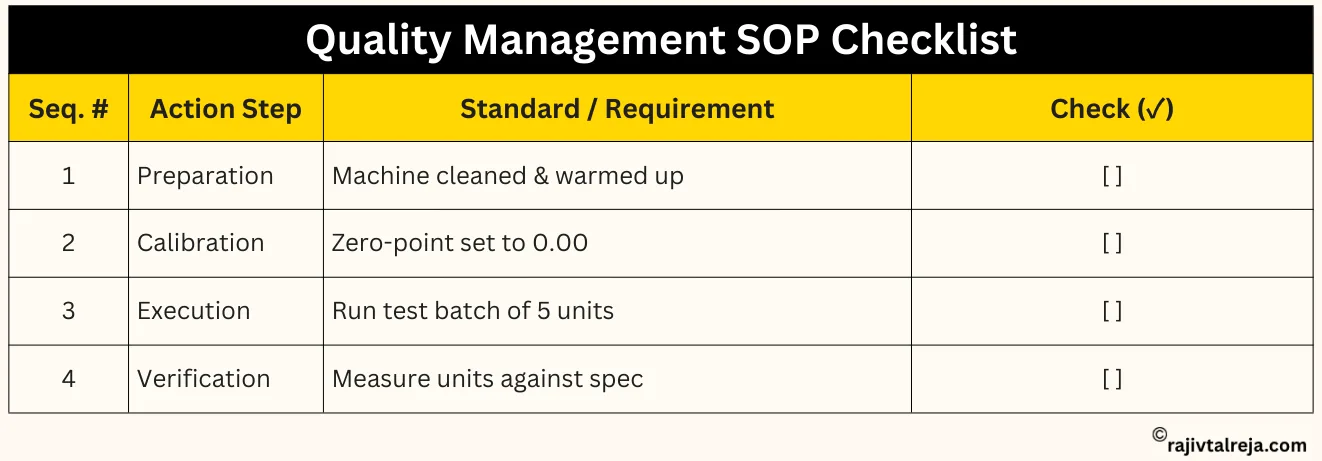
Standard Operating Procedures (SOPs) are step-by-step instructions that make sure tasks are done right every time, no matter who does them.
Write a detailed explanation of the purpose and who the SOP applies to.
A simple list with clear steps usually works best.
Write direct, action-oriented steps. For example- “Measure the gap,” not “The gap should be measured”.
Have employees try out the SOP to check if it’s clear and correct.
Quality is more than paperwork.
It’s about building a culture.
This is the foundation of concepts like total quality management, where everyone is responsible for quality.
To make this happen, you need a team that feels engaged, capable, and included.
Make sure the team understands the quality goals and how their job contributes. Keep them updated on progress.
Involve your team in creating step-by-step guides and process maps for their tasks. They know their work best, and this builds ownership.
Use simple training methods like on-the-job learning, shadowing skilled coworkers, or short in-house sessions.
Celebrate contributions openly. A public “shout-out” or a rotating “Quality Champion” award can motivate you highly, and it doesn’t even cost much.
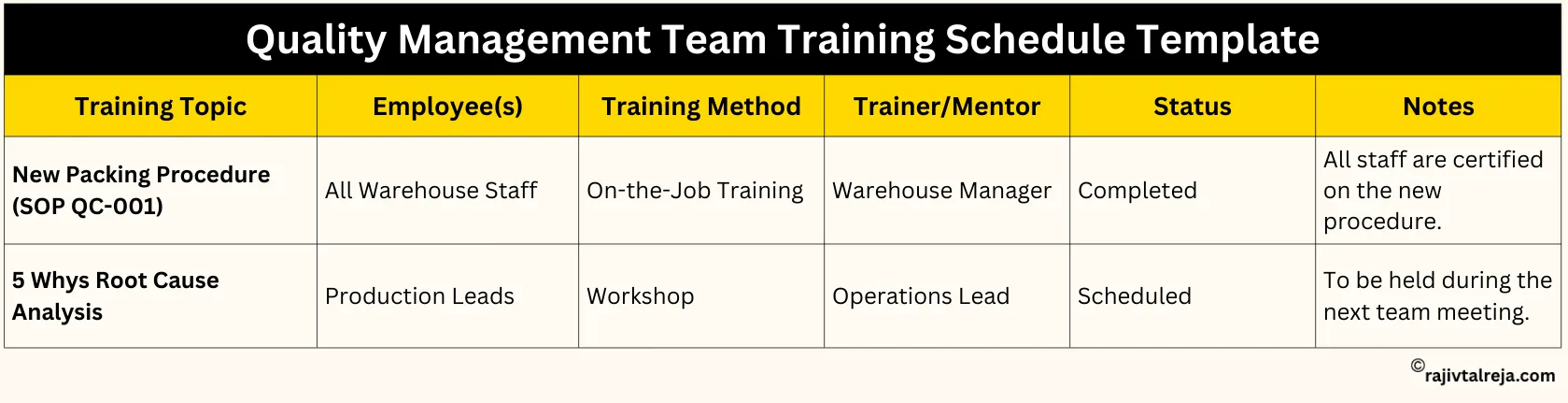
| If your team isn’t following the new quality standards, you might have a leadership gap. A business coach can help you diagnose the cultural & leadership issues that are holding back your quality goals. |



Your product’s quality depends on your supply chain.
Quality doesn’t start at your factory door it begins with the materials you receive.
You need to set clear standards and build a team-like partnership with key suppliers.
This area is often called supplier quality management.
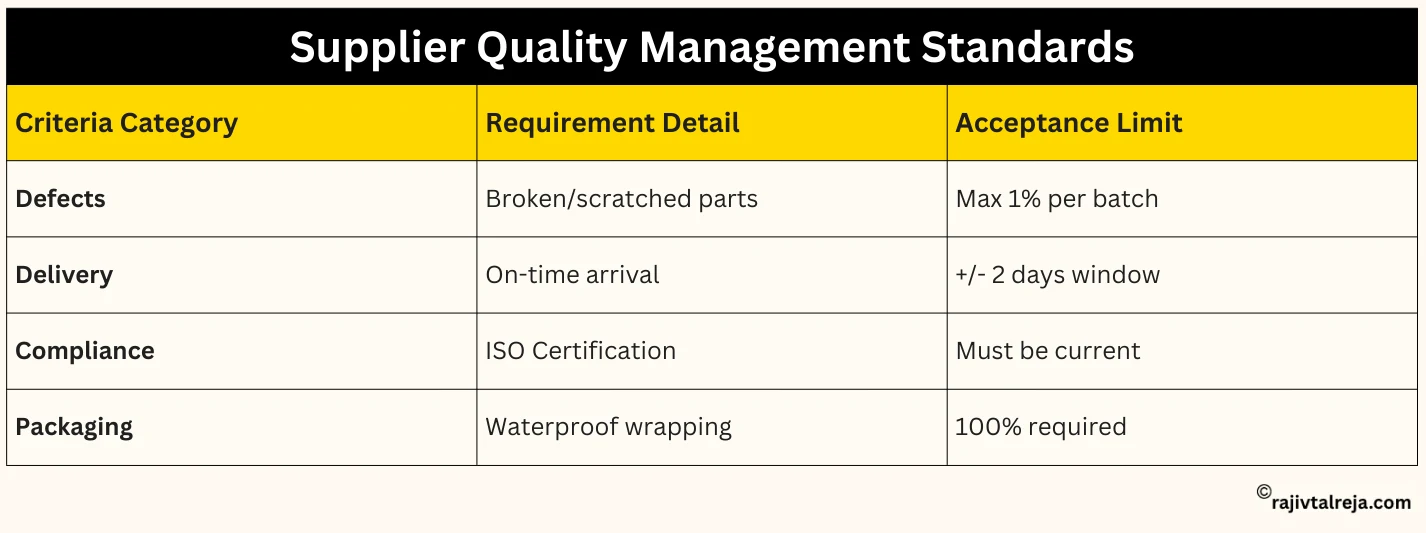
Write down exact specifications, required certifications (like ISO 9001), and acceptable defect limits before working with a supplier.
Use a simple Supplier Quality Agreement to list quality expectations and explain how to handle defective products.
Track supplier markers like on-time delivery and incoming material defects.
Treat main suppliers as partners. Share feedback and solve recurring problems together.
The final steps close the loop- RECORD, STUDY, and REINFORCE.
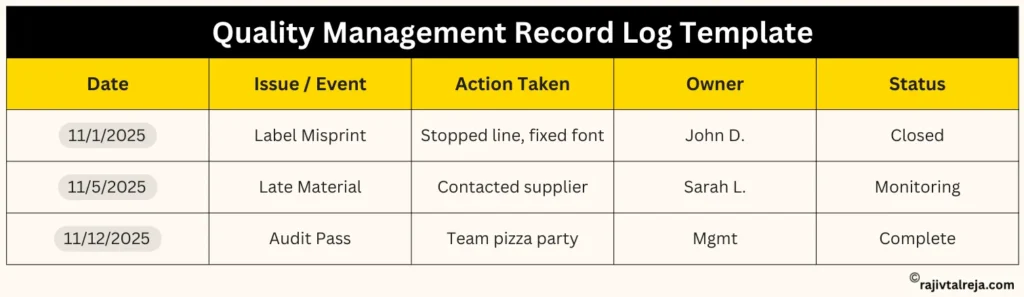
Keeping accurate records helps you make decisions based on facts.
At the same time, celebrating wins motivates your team and keeps progress moving.
Log customer complaints, products that don’t meet standards, corrective actions, and training sessions.
Stop using paper.
Use cloud-based tools or shared spreadsheets to keep data safe, accessible, and up to date.
The system you just set up follows seven main principles.
These are widely recognised as the core principles of quality management.
| Customer Focus | Understand what people need and try to go beyond expectations. |
| Leadership | Leaders create a clear goal and guide everyone toward it. |
| People Involvement | Skilled, empowered people at all levels are key to creating value. |
| Process Thinking | Handle tasks as connected processes that work together as one system. |
| Getting Better | Always look for ways to improve how things are done. These quality improvement methods are key to long-term success. |
| Fact-Based Choices | Use data and facts to guide decisions. |
| Managing Relationships | Work well with suppliers and partners for long-term success. |
Following these rules as principles of quality management will ensure your system is robust and effective.
Quality management for MSMEs is a practical way to make your business stronger.
It moves you from hoping things will work out to building a reliable system that keeps everything on track.
A strong quality management system is ongoing, not a one-time task.
The key is to start. Pick one process. Make one small improvement.
Now that you have a framework for quality, are you ready to master other areas? Read our blogs for more growth strategies for MSMEs
Follow a 7-step cycle- listen to customers, map processes, track data, standardize, and improve.
Focus on customers, leadership, team involvement, processes, and fact-based decision-making.
Use quality improvement methods like tracking KPIs, Root Cause Analysis (5 Whys), and process mapping.
Key benefits of quality management include lower costs, a better reputation, and loyal customers.
Use tools like SOP checklists, KPI trackers, customer surveys, and supplier quality agreements.


