


People no longer buy just products…
They buy values, identity, and experiences. That’s exactly what lifestyle marketing focuses on.
In 2026, customers are surrounded by choices. Brands that win are the ones that fit naturally into their audience’s lifestyle, not just their shopping cart.
This is why lifestyle advertising & lifestyle marketing strategies are becoming essential for modern businesses.
In this blog, I’ll help you understand what lifestyle marketing really is, walk you through real lifestyle marketing examples from global brands, and show you how to use it to build a lifestyle brand that connects emotionally & grows sustainably.
Let’s get started!
It is a marketing approach where brands connect their products or services to the lifestyle, values, interests, and aspirations of their target audience.
Instead of focusing only on features or price, it shows how a brand fits into a customer’s daily life… How they think, live, work, travel, or express themselves.
This is why many lifestyle campaigns focus on emotions, real-life moments, & relatable stories rather than direct selling.
In simple terms, lifestyle marketing helps customers see your brand as part of who they are, not just something they buy.
The importance lies in its ability to build emotional connections, not just transactions.
When customers feel that a brand understands their lifestyle… They trust it, remember it, & stay loyal to it.
In 2026… customers are exposed to thousands of ads daily.
Lifestyle marketing cuts through this noise by aligning your brand with your audience’s values, habits, & aspirations.
Research shows emotionally connected customers are more likely to choose a brand repeatedly and to recommend it to others… Nearly 70% of customers do so.
For business owners, this helps move beyond price competition and positions your brand as meaningful within the market you serve…
It is a brand that represents a set of values, beliefs, and a way of living that customers emotionally connect with. It goes beyond selling products and instead becomes part of a customer’s identity.
These brands focus on how customers FEEL when they use the product, how it fits into their daily routine, and what it says about them. This is why successful lifestyle brands build communities, not just customer bases.
For MSME owners, becoming a lifestyle brand means clearly standing for something your audience believes in and consistently reflecting it across your messaging and actions.
The key aspects are customer values, daily habits, aspirations, emotional triggers, community influence and brand alignment…
| Aspect | What It Means |
| Customer Values | Shared beliefs, priorities, and attitudes of your audience |
| Daily Habits | How customers live, work, eat, travel, or spend time |
| Aspirations | What customers want to become or achieve |
| Emotional Triggers | Feelings like belonging, confidence, or self-expression |
| Community Influence | Peer groups, social media, and cultural trends |
| Brand Alignment | How well a brand fits naturally into the customer’s lifestyle |
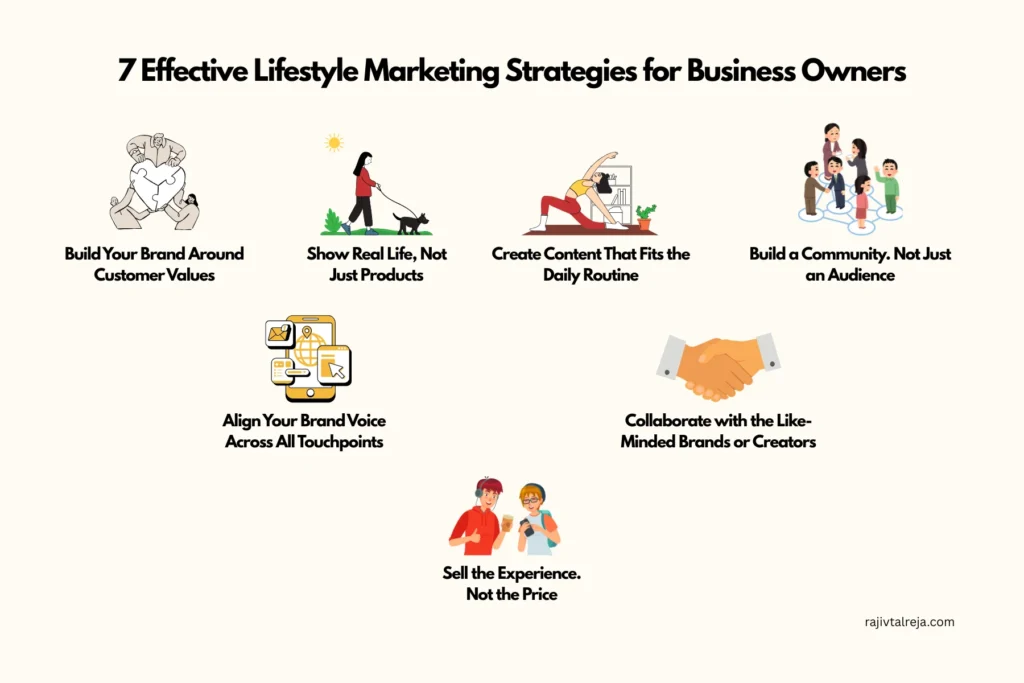
Here are the 7 best strategies you can implement…
Identify what your customers care about… [health, convenience, sustainability, status, or community].
Reflect that factor consistently in your messaging. Talk less about features, more about shared beliefs and outcomes.
Use real customers, real stories, & real moments in your content. Share behind-the-scenes posts, customer routines, or everyday scenarios.
It works best when the content you create feels natural in a customer’s day… Try posting content around work life, weekends, travel, fitness, or family moments, etc.
Lifestyle brands grow faster when customers feel they belong.
You can use WhatsApp groups, social media comments, or offline meetups to engage regularly.
Consistency builds trust in the lifestyle market.
Use the same tone, values, and visual style across ads, social media, and emails.
Lifestyle marketing grows through association…
Partner with creators or brands your customers already follow and trust.
It helps you move away from discounts. Highlight how your product improves life, saves time, or creates meaning.
A simple example is how brands like Nike or Apple promote a way of living, not just products.
One of the clearest ways to understand this approach is to look at real lifestyle marketing examples from brands that have mastered it.
Nike – Selling Motivation, Not Just Shoes
Nike’s “Just Do It” campaigns rarely focus on product features.
Instead, they spotlight personal achievement, resilience, and the athletic mindset. From featuring everyday runners to partnering with athletes like Colin Kaepernick, Nike positions itself as a symbol of determination.
Customers don’t just buy shoes… They buy into a lifestyle of discipline and self-belief.
GoPro – Turning Customers Into Storytellers
GoPro built its entire brand around user-generated content. Instead of running traditional ads, GoPro encourages its customers to share their own adventure videos… from surfing and skydiving to travel vlogs.
The product becomes invisible and the lifestyle of exploration takes centre stage.
This is one of the strongest lifestyle marketing examples because the community essentially markets the brand for free.
Lululemon – Building a Wellness Community
Lululemon doesn’t just sell activewear.
It promotes a lifestyle of health, mindfulness, and personal growth. Through campaigns like #TheSweatLife and community-driven events such as free yoga classes and in-store fitness sessions, the brand has cultivated a loyal following.
Lululemon’s lifestyle advertising focuses on how customers feel when they wear the brand, not just how they look.
Red Bull – Owning the Adrenaline Lifestyle
Red Bull went far beyond being an energy drink.
By sponsoring extreme sports events, athletes, and even Felix Baumgartner’s record-breaking space jump, Red Bull positioned itself as a lifestyle brand for thrill-seekers.
Their content rarely talks about the drink itself… It’s all about the energy and adventure their audience craves.
Patagonia – Purpose as a Lifestyle
Patagonia has become one of the most recognised lifestyle brands by aligning itself with environmental activism and outdoor adventure.
Their “Worn Wear” campaign encouraged customers to repair and reuse old gear instead of buying new products.
For Patagonia, the lifestyle they sell is conscious living and love for the outdoors… and customers who share those values stay loyal for years.
Apple – Simplicity as an Identity
Apple’s marketing has always focused on creativity, simplicity, and self-expression rather than technical specifications.
Their lifestyle ads showcase how people use Apple products to create music, design, tell stories, and stay connected… making the brand feel like a natural extension of a creative, modern life.
Airbnb – Live Like a Local
Airbnb transformed travel marketing by promoting the idea of living like a local rather than staying in a hotel. Their campaigns highlight authentic experiences, unique stays, and real stories from hosts and travellers.
Airbnb doesn’t sell accommodation… It sells the lifestyle of meaningful travel and cultural immersion.
Each of these lifestyle marketing examples shows that the focus is never on the product alone. It’s about the life the customer wants to lead.
For MSME owners, the takeaway is simple… When your brand reflects your customer’s identity and aspirations, marketing becomes connection, not promotion.
A lifestyle marketing campaign is a marketing campaign designed to show how a brand fits into the everyday life, values, & aspirations of its target audience.
Instead of focusing on product features or discounts… a lifestyle marketing campaign highlights real-life situations, emotions, and experiences that resonate with customers.
This helps position the brand as part of a lifestyle rather than just a seller.
For business owners, a lifestyle marketing campaign could be as simple as a social media series, a short video, or customer stories that reflect how your product is used in daily life.
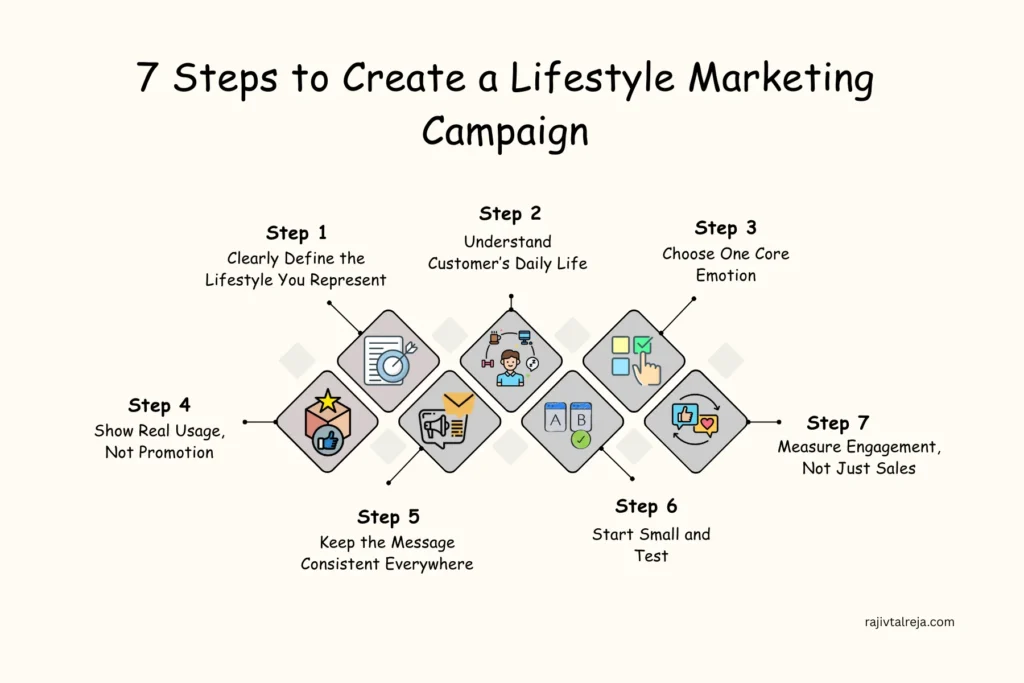
Decide what kind of life your brand fits into…
For example, busy professionals, health-focused families, creators, travellers, or local communities.
Ask yourself, “What kind of person naturally uses my product?”
Look at how the customers spend their day [for example, their work hours, routines, challenges, & small joys]. This helps your campaign feel real, not forced.
The campaign will work best when it focuses on one main feeling…
It can be confidence, freedom, comfort, belonging, or simplicity. Don’t try to say everything at once.
Create content that shows your product/service being used naturally in daily life. Photos, short videos, stories, or testimonials can work best.
Use brand mandates and keep it consistent.
Use the same tone, visuals, & values across social media, emails, ads, & your website. Consistency builds trust in the market.
You don’t need a big launch. Start with one platform, one message, and one format.
See what your audience responds to & then scale.
Track likes, comments, saves, shares, and repeat interactions. Lifestyle marketing success shows up in connection before there is conversion.

Let’s look into the major trends in 2026…
Customers are choosing brands that stand for clear values like sustainability, inclusivity, and well-being.
Lifestyle brands that communicate why they exist build stronger trust.
Brands are focusing more on building communities than just followers… through groups, events, workshops & conversations.
Polished ads are giving way to authentic, everyday content featuring real customers and creators.
Customers care more about how a brand makes them feel than what it sells.
Experiences are becoming the product.
It is shifting toward smaller, niche creators who feel relatable and trustworthy.
Brands are using personalised content, recommendations, and messaging to match individual lifestyles.
Short videos, social storytelling, and mobile-first content are now central to lifestyle marketing campaigns.
Now you know that lifestyle marketing is all about understanding people. When your brand reflects how customers live, think, and aspire, marketing stops feeling like marketing.
As the lifestyle marketing examples from brands like Nike, GoPro, and Lululemon show… You don’t need a massive budget. You need a clear lifestyle identity and the consistency to reflect it in everything your brand does.
If you focus on shared values, real stories, and consistent experiences… lifestyle marketing can help you build a brand that customers not only buy from but also believe in.
If you’d like more practical marketing insights and strategies designed for business owners, visit our blog page for more useful business insights like this.


The four main types of marketing are product marketing, service marketing, digital marketing, and lifestyle marketing. Lifestyle marketing focuses on emotions, values, and how a brand fits into a customer’s daily life.
The concept of lifestyle marketing is to connect a brand with the lifestyle, beliefs, and aspirations of its target audience rather than just promoting features or price.
The 3-3-3 rule in marketing means communicating your brand message in 3 seconds (for attention), 3 minutes (creating interest), & 3 actions (engagement).
It influences what people buy, how often they buy, and which brands they trust. Consumers prefer brands that reflect their identity, habits, and values.
The key elements include customer values, emotional connection, real-life storytelling, brand consistency, & community engagement.
Lifestyle products include fashion, fitness, wellness, food & beverages, travel, tech gadgets, home décor, and personal care, basically anything tied to how people live and express themselves…
Some of the most popular lifestyle brands in India include Nike, Apple, Adidas, Tata Starbucks, and FabIndia, known for strong emotional and cultural connections.
The common channels for lifestyle marketing include social media, influencer marketing, content marketing, email campaigns, brand communities, & experiential events.
Today, most brands focus on lifestyle marketing because it builds long-term loyalty, emotional trust, and higher customer lifetime value, helping them move beyond price competition.


