


It’s 8- 00 PM on a Tuesday, and you’re still on a call with a “tricky” client because your SALES TEAM couldn’t close the deal without YOU.
This reality often stems from a lack of professional sales leadership within the organisation.
You’ve built a good business, maybe even crossed the ₹10 crore mark, but lately it feels like you’re running in place.
Every new lead needs your “special touch,” and your growth has hit a wall.
It’s just bottlenecked by how good you are at what you do. Strong sales leadership skills are required to move past this plateau.
In the next section, we’ll look at why being the best salesperson in your company is actually holding back your growth.
You built this business on grit, but your “special touch” has now become your biggest growth barrier.
When you remain the main deal-closer, you create a “Hero Culture” where the team supports you instead of driving sales independently.
This isn’t just about poor time use.
It shows a gap in building Institutional Equity.
Effective sales management involves stepping back so your team can step up.
When your team waits for your go-ahead on every discount, they lose momentum.
In 2026, speed is everything, and the business starts to slow down.
Your team copies your hustle but misses the “why” behind it, because your process is intuitive, not clearly explained.
Without a clear, codified Sales Playbook, your growth stays tied to your hours instead of becoming exponential.
This happens because leadership is often confused with management.
This isn’t a people problem. It’s a sales leadership problem.
You must focus on sales development to empower your staff.
In the next section, you’ll learn the specific traits you need to bridge this gap.
| Breaking this bottleneck requires a shift in perspective. So, if you are constantly stuck in this approval trap, a business coach can help you design a system where your team doesn’t need your permission for every single step. |

When an MSME wants to grow, the owner can’t keep being the only one with the “special touch.”
That’s where a real sales leader steps in.
But what does such a leader look like in 2026?
It’s not about being a SUPER CLOSER.
It’s about being a SMART STRATEGIST who builds a system that works even when the founder isn’t watching every move.
Implementing a robust sales leadership framework is the first step toward this freedom.
Think of it this way- a strong sales leader doesn’t just chase the next paycheck. They create a setup that makes those paychecks predictable and consistent. |
These sales leadership qualities define the modern high-growth firm.
They don’t simply react to monthly targets.
They look at the bigger picture, study global value chains, and track changes in the Indian economy to decide where the team should focus three years from now, not just by the end of this week.
We’ve all seen leaders who try to rule by fear, but that approach doesn’t work anymore.
Effective sales leaders use high EQ to manage tough conversations, keep people motivated, and maintain team morale even when a big deal falls through.
They’ve replaced gut instinct with real numbers.
Their focus is on conversion rates, how quickly customer leads get responses, and using CRM data to forecast next month’s cash flow with precision.
Their biggest success is not closing a deal themselves.
It’s seeing a junior team member close one.
They use models like the SBI (Situation-Behaviour-Impact) method to turn mistakes into teachable moments and learning opportunities.
When the market shifts or rules change, they don’t panic.
They run small pilot tests to try new strategies, stay calm under stress, and keep their team focused and confident.
They make sure the team isn’t just selling a product but solving specific customer problems.
They turn client feedback into actionable data to keep the company’s offerings relevant and valuable.
They set clear, SMART goals.
When things go right, they share the credit.
When things go wrong, they take responsibility and improve the process.
It’s a different vibe, isn’t it?
Next, we’ll see how this kind of leader needs the right team to bring the vision to life.
Understanding these sales leadership examples helps you visualise your future role.
Here, your primary focus shifts from “closing” to “coaching.”
Sales leadership works best when the team truly supports it.
You may be a great coach, but you still need players who can execute the game plan.
You need to hire for specific sales skills that align with your vision.
Here’s a simple sales leadership framework to guide your hiring-
In India, real relationships are built in local languages.
To connect with customers in Tier 2 & 3 cities, your sales team should speak the language customers are comfortable with.
If someone refuses to use the CRM, they quickly become a liability.
Sales today need structure, not guesswork.
Can they handle being rejected 9 out of 10 times and still make the 151st call with confidence and a positive attitude?
That mindset separates average sellers from reliable performers.
They need to pick up on what customers don’t say out loud to handle objections effectively.
Buyers in 2026 are smart and informed.
Your team should be “Professional Learners” who stay updated on AI advancements and industry trends.
The “Lone Wolf” no longer fits.
You need team players who coordinate with production and finance to ensure what is sold can actually be delivered.
Hire people who think beyond their job titles and take ownership of their goals and quota.
When you hire for these sales skills, your role as a leader becomes significantly easier.
MSMEs that invest in well-structured sales leadership training programs see profit growth of 30–50% within a single year.
Proper sales development ensures your team stays ahead of the competition.
You can even calculate it yourself-
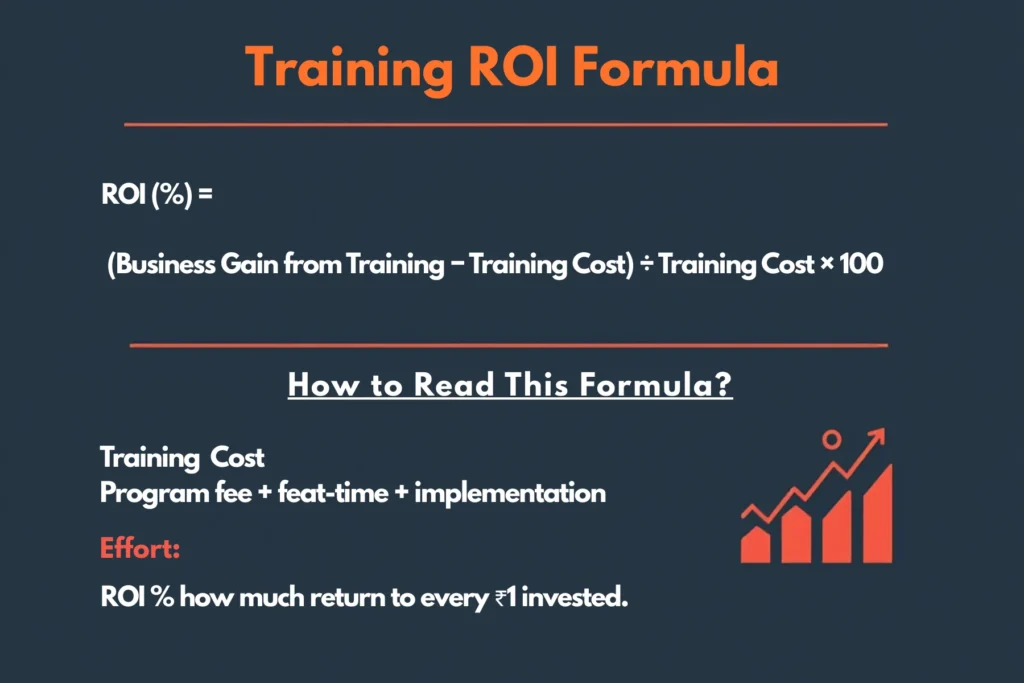
We are clearly moving from “Activity” (how many calls are made) to “Impact” (how quickly a new hire becomes profitable).
By strengthening your systems through sales leadership training, you move from individual effort to a true “Sales Machine.”
This allows you, the business owner, to focus on strategy and growth instead of daily firefighting.
| Type of Training | Focus Area (2026) | Measurable ROI Metric |
| Sales leadership training | Strategic Decision-Making & EQ | 3x survival rate in market shifts |
| Sales Skill Training | Value-Based Selling & Discovery | 30-50% increase in profitability |
| Digital/AI Training | CRM Discipline & AI Outreach | 23x more likely to acquire buyers |
| Behavioral Coaching | Conflict Resolution & Empathy | 50-80% lower team turnover |
Many MSME owners mix up these two roles.
Even if you’re handling both, it’s important to know the difference so you can delegate properly.
Understanding the sales leader vs sales manager dynamic is crucial for scaling.
| Aspect | Sales Manager (Tactical) | Sales Leader (Strategic) |
| Focus | Thinking about the next 90 days | Planning ahead for the next 5 years |
| Success Metric | Meeting the current quota | Building a strong, reliable team |
| Communication | Giving instructions and checking progress | Coaching and motivating the team |
| Risk | Playing it safe and avoiding mistakes | Taking chances and trying new ideas |
If you only focus on sales management, you can build a culture of fear and micromanagement.
If you only “Lead,” you’ll have great visions but weak follow-through.
You need a sales leadership framework that balances both sides effectively.
Deciding between a sales leader vs a sales manager mindset will dictate your growth speed.
Now you know, the goal of sales leadership is not higher targets. The transition to sales leadership is necessary for business growth.
It is a sales team that works without the founder stepping in.
This makes sales predictable, scalable, and most importantly, STRESS-FREE.
You gain financial confidence and the emotional space to actually enjoy the business you’ve built.
The journey from ₹10 crore to ₹100 crore is about moving from “Person-led Hustle” to “Leader-led Excellence.”
Explore more MSME growth blogs to scale your business today.
It is building a sales leadership framework so the team closes deals without the founder.
A leader uses sales development to create a predictable, scalable, and stress-free sales machine.
Key traits include strategic thinking, high EQ, data-driven decisions, and a coaching mindset.
Managers focus on 90-day tactics; leaders focus on 5-year growth and building strong teams.
The top sales leadership skills are strategic anticipation, emotional intelligence, and coaching.
Invest in sales leadership training to move from individual hustle to high-impact profitability.
Look for regional language fluency, tech discipline, resilience, and a growth-oriented mindset.


