


If you are running a small business in India, chances are you started as a sole proprietor.
It is simple. It is fast. It feels safe.
But the real question is not whether it is easy to start.
The real question is – is it the right structure for where your business is going?
This blog is not about legal explanation.
This is a business clarity document for MSME owners.
Is a sole proprietorship helping you grow or silently limiting you?
Let’s break this down clearly:
A sole proprietorship is a business owned and controlled by one person, and legally, you and your business are the same.
There is no separate legal identity. Your PAN is the business PAN. Your profit is your income. Your losses are your personal losses.
In India, you don’t need MCA registration to start. Usually, you begin with:
Simple to start. But remember, since there is no separation between you and the business, all responsibility sits on your shoulders.
That becomes important when we discuss risks.
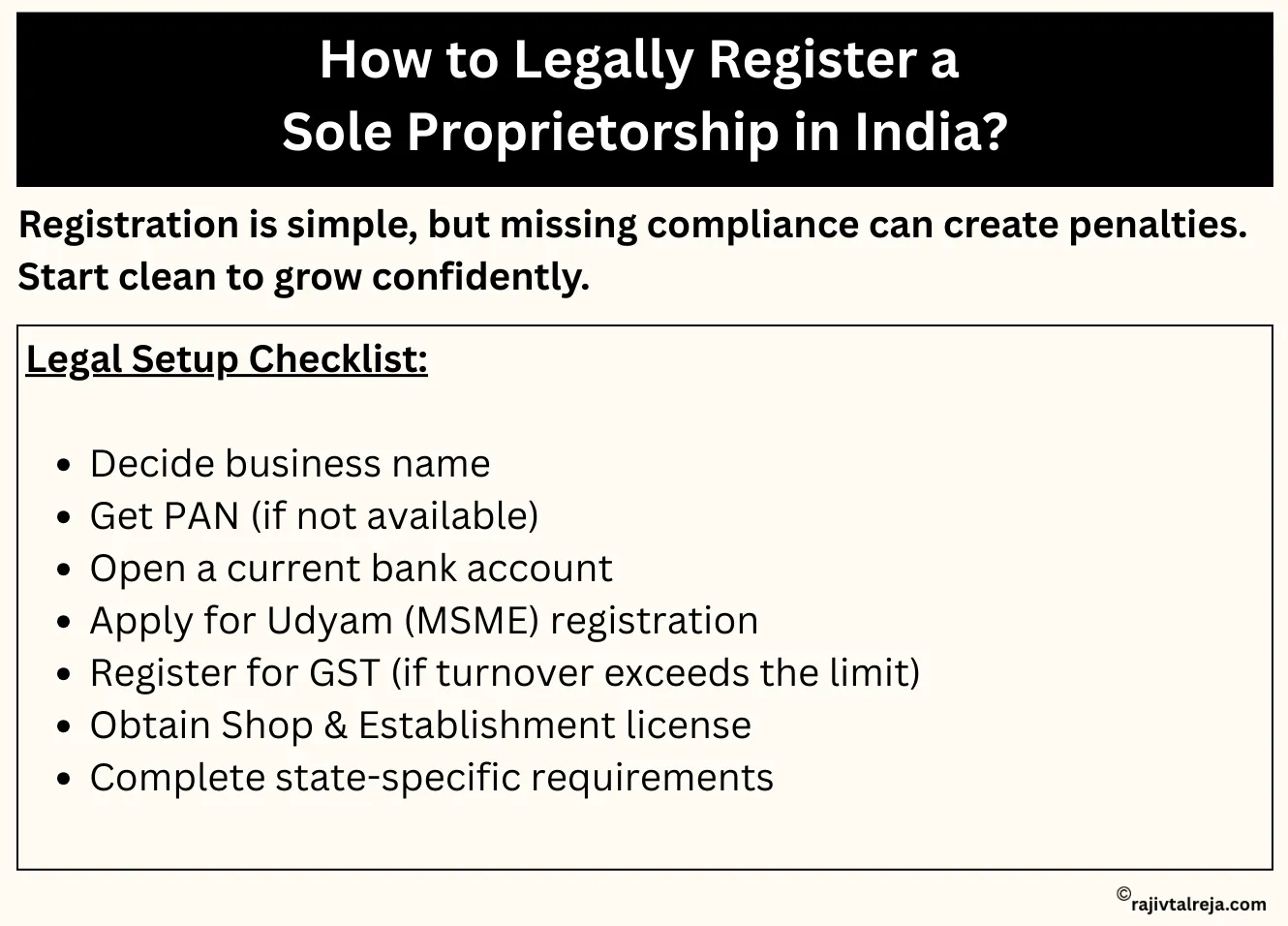
To make a smart decision, you must look at both sides clearly.
Let us understand the sole proprietorship advantages and disadvantages in a simple format.
| Advantages of Sole Proprietorship | Short Explanation | Disadvantages of Sole Proprietorship | Short Explanation |
| 1. Easy to Start | No company registration. Basic licenses are enough. | 1. Unlimited Liability | You are personally responsible for all business debts. |
| 2. Full Control | You make all decisions without approval from others. | 2. Personal Asset Risk | Your house, savings, and property can be used to repay business loans. |
| 3. All Profits to You | 100% profit belongs to you. No sharing. | 3. Hard to Raise Capital | Cannot issue shares. Depends on savings or bank loans. |
| 4. Low Setup Cost | Very low registration and compliance costs. | 4. Limited Growth | Growth depends only on your money and effort. |
| 5. Simple Tax Filing | Business profit is added to your personal income tax. | 5. Higher Tax at High Profit | You may pay higher personal tax than companies. |
| 6. Flow-Through Taxation | No separate corporate tax. Tax paid once only. | 6. No Business Continuity | Business stops if you retire, fall sick, or pass away. |
| 7. Privacy | No need to publish financial reports publicly. | 7. Heavy Personal Burden | You handle all roles – finance, sales, operations. |
| 8. Fewer Regulations | No ROC filings or corporate formalities. | 8. Reduced Credibility | Big clients may prefer dealing with companies. |
| 9. Easy to Close | You can shut down without a complex legal process. | 9. No Startup Recognition | Cannot get DPIIT startup benefits. |
| 10. Suitable for Small Businesses | Good for local shops, freelancers, and small traders. | 10. Rising Compliance Pressure | GST and labour laws still apply and are increasing. |
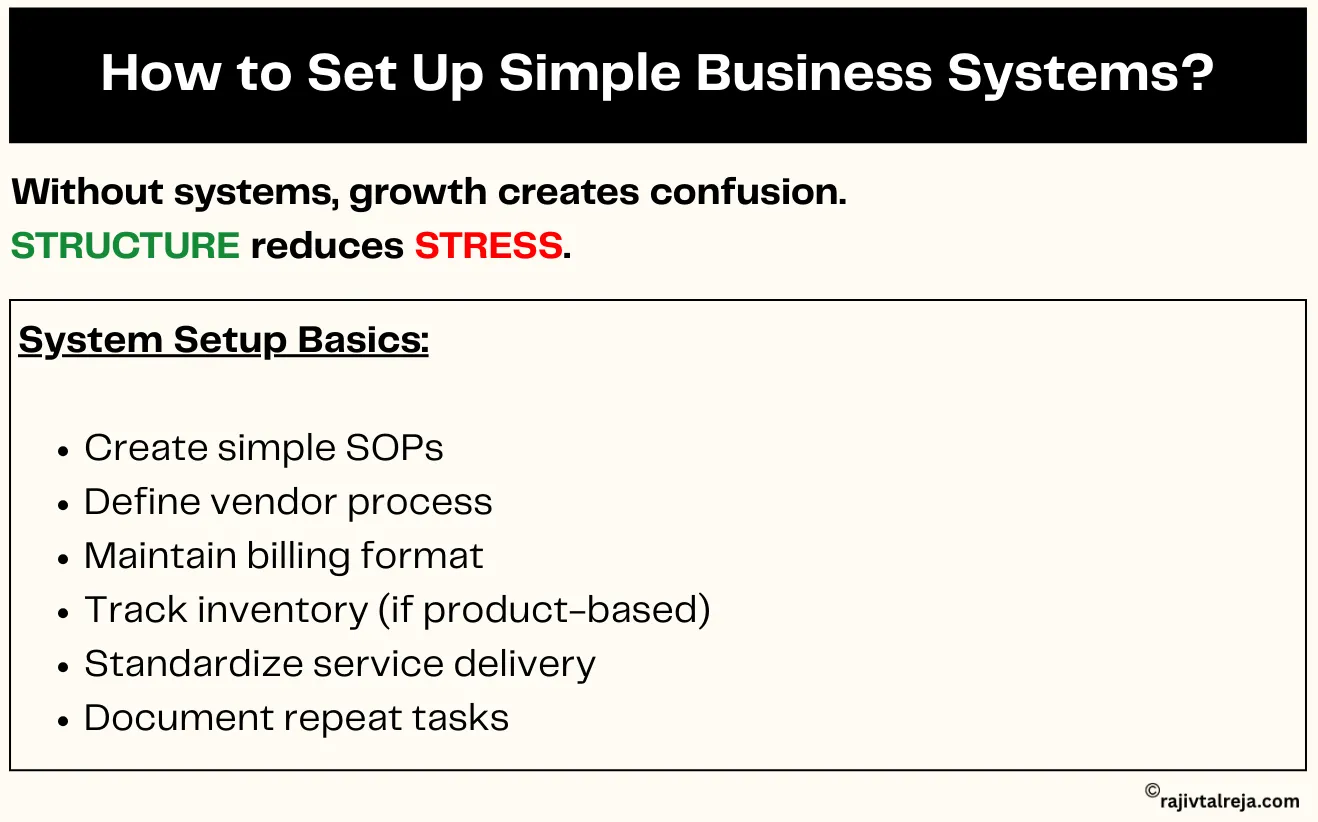
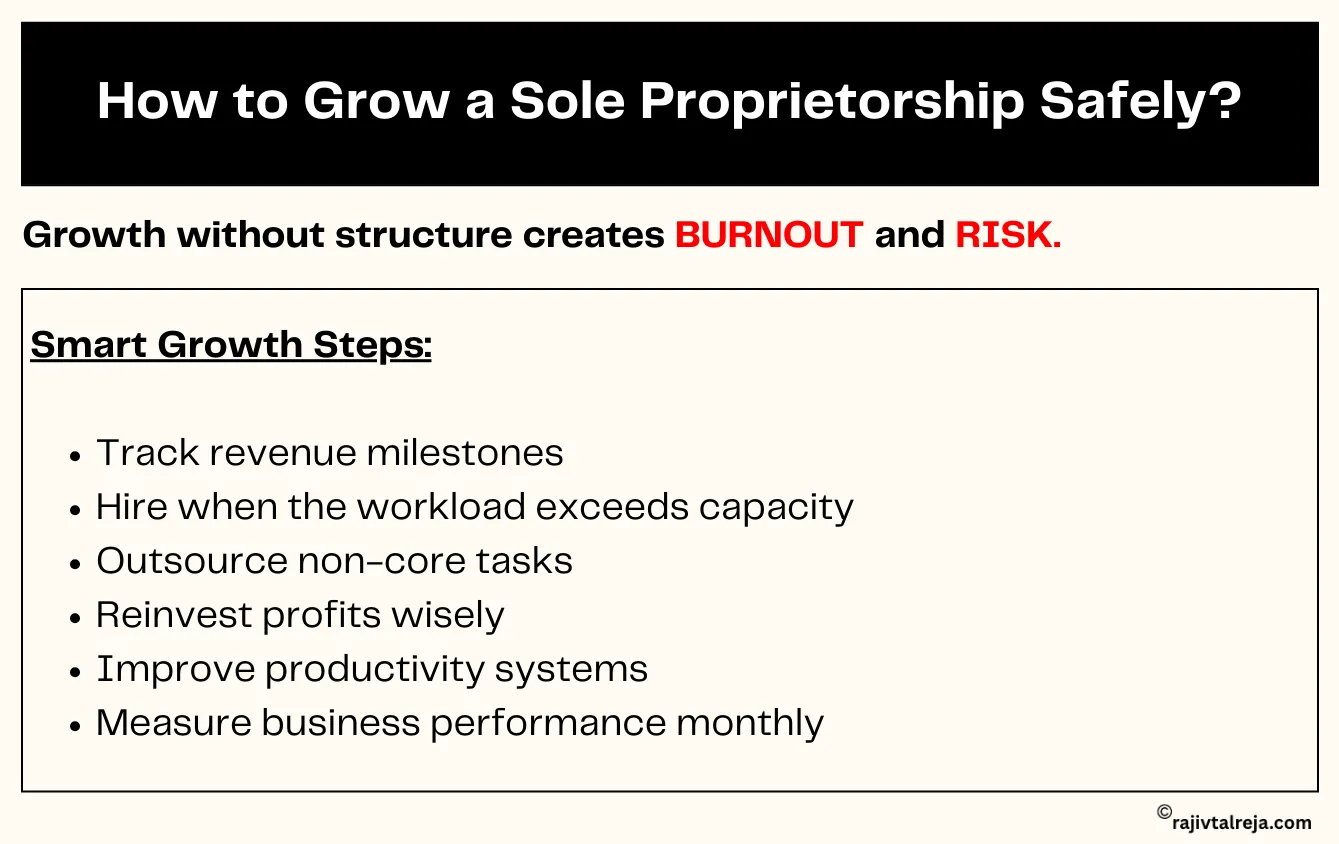
Growth requires structure, not just hard work. As your business expands, risks, workload, and financial pressure also increase.
Sustainable scaling comes from strengthening systems, protecting finances, and preparing the business for the next level, not from working longer hours.
| Problem | Solution | Impact |
| Low profit margins during expansion | Improve profitability before scaling | Stronger cash flow and safer growth decisions |
| Difficulty getting larger loans | Build a strong banking relationship | Better credit access and funding opportunities |
| Business is vulnerable to market shocks | Maintain a 6-month emergency fund | Stability during slow sales or delayed payments |
| Personal financial risk | Take business insurance | Protection from legal and operational liabilities |
| Owner overloaded with daily tasks | Document and delegate processes | Reduced burnout and improved efficiency |
| Inconsistent work quality | Systemise operations with SOPs | Consistency, scalability, and smoother operations |
| Vendor disputes or payment conflicts | Formalize vendor agreements | Clear expectations and fewer business disruptions |
| Growth is limited by the business structure | Convert the structure at the right stage | Increased credibility, funding access, and long-term scalability |
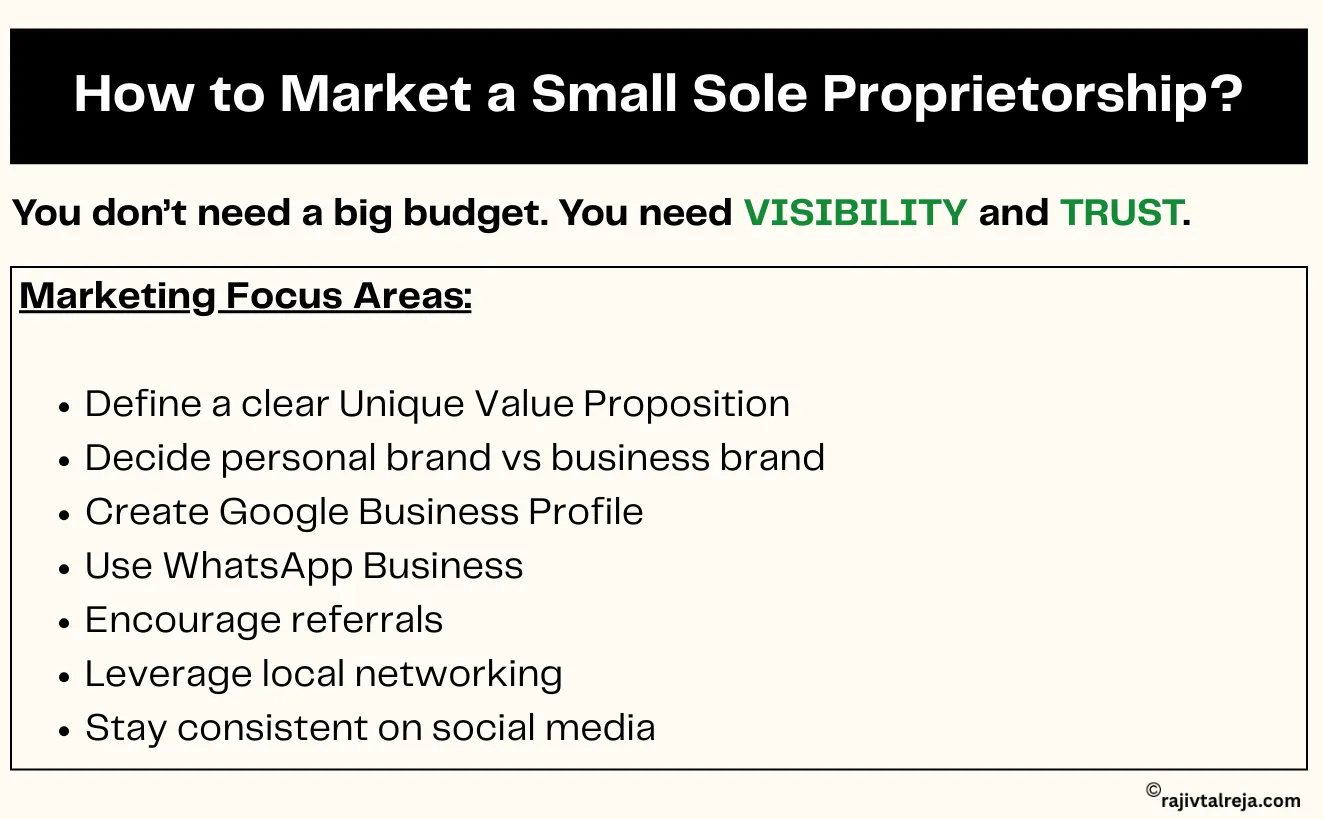
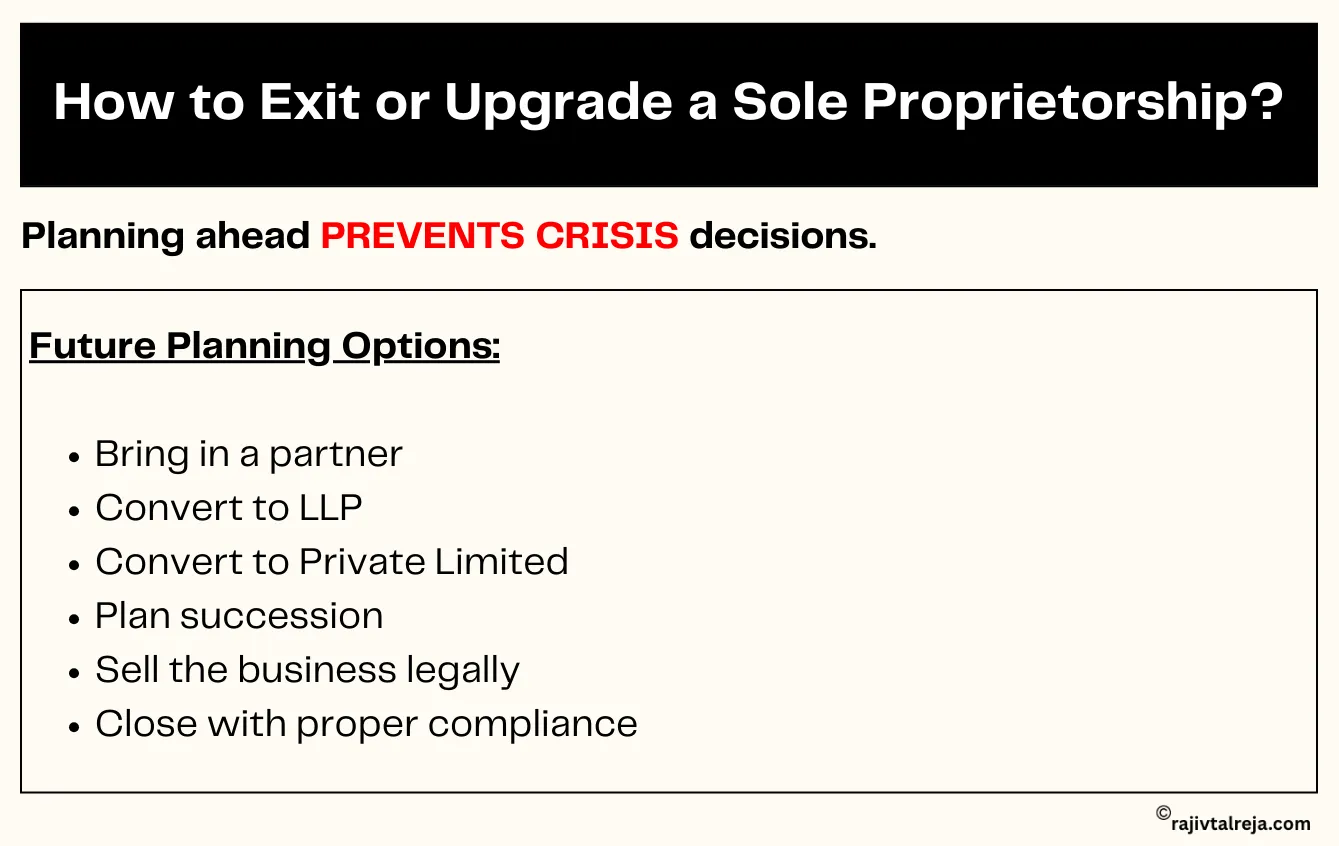
The right structure depends on your current stage and growth ambition.
Sole proprietorship advantages and disadvantages become clearer when you compare real business situations.
| Situation in Your Business | Stay as Sole Proprietor If… | Upgrade to LLP / Pvt Ltd If… |
| Turnover Level | Your turnover is small (for example, below ₹1–2 crore) and stable. | Your turnover is growing fast and crossing ₹2–3 crore with bigger contracts. |
| Loan Exposure | You have little or no business loans. | You have large loans or personal guarantees, increasing your risk. |
| Risk Level | Your business has low legal risk (small local trading, limited liability exposure). | You sign large contracts, deal with big clients, or face higher legal risk. |
| Capital Needs | You can grow using your own savings and small bank loans. | You need investors, partners, or bigger structured funding. |
| Personal Asset Protection | You are comfortable with unlimited legal liability. | You want to protect your personal assets from business risk. |
| Business Continuity | Business depends mainly on you, and you are fine with that. | You want the business to continue even if you step away or retire. |
| Tax Planning | Profits are moderate, and the personal tax slab is manageable. | Profits are high, and you want better tax planning flexibility. |
| Client Expectations | You deal mainly with local customers or small vendors. | Large corporate clients prefer dealing with registered companies. |
| Team Structure | You operate alone or with a very small team. | You plan to build leadership, bring co-founders, or expand team structure. |
| Growth Ambition | You want a steady income and a manageable scale. | You want aggressive growth and long-term asset building. |
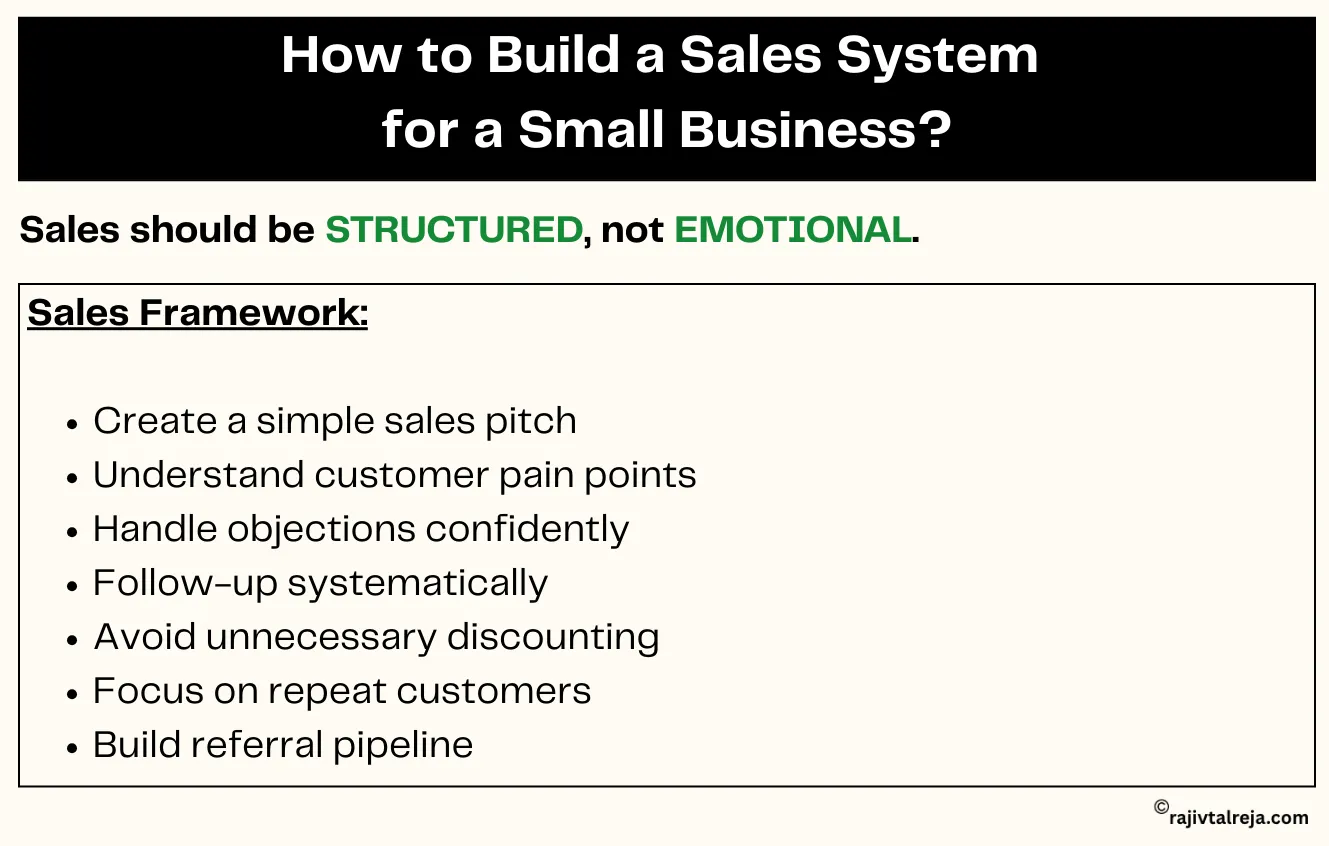
Tax is one of the biggest factors in the advantages and disadvantages.
Here is how taxation works in simple terms.
| Tax Area | How It Works for Sole Proprietor | What You Should Know as an MSME Owner |
| Income Tax | Business profit is treated as your personal income. | You pay tax as per individual income tax slabs (not corporate tax). |
| Flow-Through Taxation | There is no separate business tax. Profit “flows” to your personal return. | You file only one Income Tax Return (ITR-3 or ITR-4). |
| Tax Slab Rates | Tax is based on your total personal income. | Higher profit = higher tax slab (can go up to 30%). |
| Presumptive Tax (Section 44AD) | You can declare 6–8% of turnover as profit (if eligible). | Reduces bookkeeping and audit burden for small businesses. |
| Tax Audit Requirement | An audit is required only if turnover crosses specified limits or profit is very low under 44AD. | Most small businesses avoid an audit if within limits. |
| Advance Tax | Must pay tax in quarterly instalments if liability exceeds ₹10,000. | Missing deadlines leads to interest penalties. |
| GST Registration | Required if turnover crosses threshold (₹40 lakh goods / ₹20 lakh services, generally). | Once registered, you must file GST returns regularly. |
| TDS (Tax Deducted at Source) | Large clients may deduct tax before paying you. | Check Form 26AS to claim credit for the deducted tax. |
| Corporate Tax | Not applicable. | A sole proprietorship does not pay separate corporate tax. |
| Dividend Tax | Not applicable. | No dividend distribution since profits belong directly to you. |
| Don’t let taxes, compliance, and unlimited liabilities keep you up at night. The best business coach helps you transition from a struggling proprietor to a secure, systems-driven business owner. |



Sole proprietorship is simple, flexible, and perfect for starting small. But growth changes everything.
Understanding the sole proprietorship advantages and disadvantages helps you protect what you build.
Your business should create wealth, not risk your personal life. Think clearly. Check your numbers.
And choose the structure that supports your next level, not your past comfort.
Click here for more MSME growth blogs to scale your business safely.
A one-owner business with full control and unlimited liability.
Freelancers, shop owners, consultants, tutors, traders.
Easy setup, full control, simple compliance, direct profits.
Unlimited liability, limited funding, scaling challenges.
Single owner, no separate entity, full risk, full reward.
Personal assets are liable for business debts.
To start and run a small business independently.


