


Here’s something most business owners won’t admit… They know their product is good. They know the market is there. But sales? Sales still feels like a struggle.
The problem isn’t the product. It’s the sales mindset. A sales mindset is the mental framework that shapes how you approach selling, handle rejection, and stay consistent with your efforts day after day. It’s what separates a business that grows from one that stays stuck.
With over 6.30 crore MSMEs in India contributing nearly 30% to GDP, the opportunity is massive. But most small business owners are still selling without a system, without training, and without the right salesperson mindset.
Let’s change that.
A sales mindset is the way you think about selling. It includes your beliefs about money, your comfort with asking for a sale, and how you handle a “no.”
For most MSME business owners, sales isn’t a department. It’s something the owner does between managing operations, handling cash flow, and trying to keep the team together.
That’s exactly why the importance of the attitude of the salesperson matters so much. When the owner carries a negative mindset about selling, thinking it’s “pushy” or “not for me”, it shows up in every conversation with a potential customer.
In our experience working with hundreds of businesses, the ones that grow consistently have one thing in common: the owner treats sales as a skill to be developed, not something to be endured.
A sales mindset for business growth starts with one simple belief: selling is serving.
When you genuinely believe your product solves a real problem, asking for the sale becomes natural.
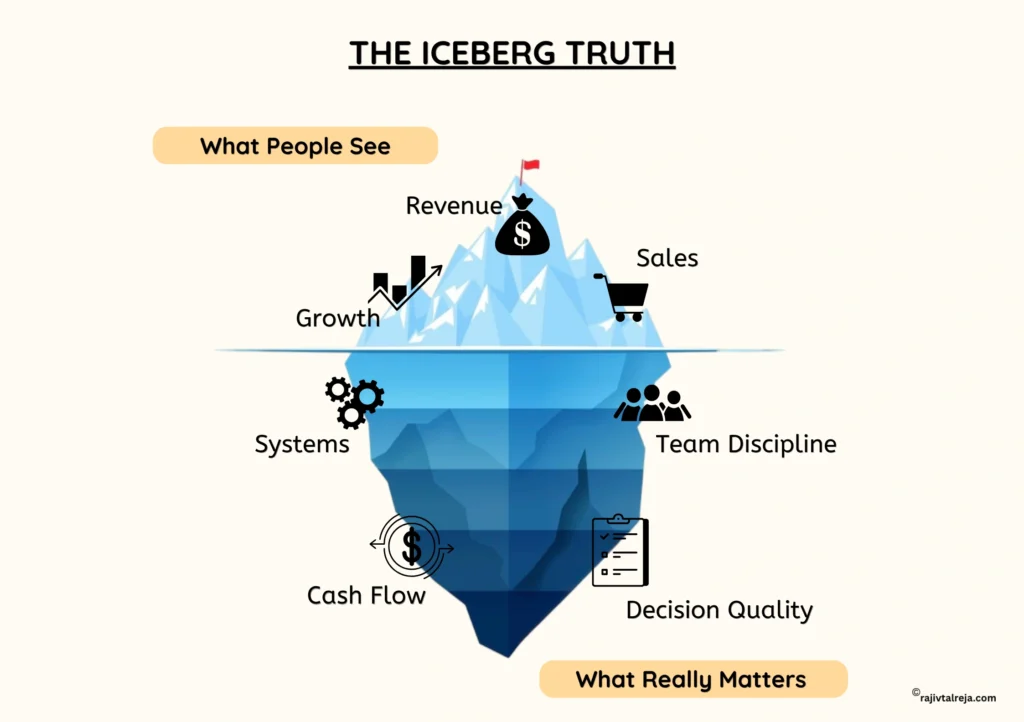
Dr. Carol Dweck’s research on growth mindset in sales has changed how we understand performance.
A fixed mindset assumes your abilities are set in stone. A growth mindset believes you can improve through effort and learning.
Here’s how this plays out in sales:
| Situation | Fixed Mindset Response | Growth Mindset Response |
| A prospect says no | “I’m just not good at selling.” | “What can I learn from this conversation?” |
| Sales are down this month | “The market is bad. Nothing I can do.” | “Let me review my process and try a different approach.” |
| A competitor undercuts your price | “We can’t compete. They’ll always be cheaper.” | “How can I communicate our values better?” |
| A new team member struggles with sales | “They’re just not a natural salesperson.” | “They need better training and a clear sales script.” |
| A big deal falls through | “I always lose the big ones.” | “What was missing? Let me fix it for next time.” |
The shift from fixed to growth is the foundation of a successful sales mindset. It doesn’t mean ignoring problems. It means treating every setback as data.
What we’ve seen time and again is this: business owners who adopt a growth mindset in sales don’t just sell more. They build systems, train their teams, and create a culture where sales becomes everyone’s responsibility.
Whether you’re the one selling or you’re hiring a team, understanding the right salesperson skills and qualities is non-negotiable.
Here are the qualities of a good salesperson that we’ve seen make the biggest difference across industries:
| Salesperson Quality | What It Means | How It Helps Your Business |
| Positive Mindset in Sales | Staying optimistic even after rejection or a slow month. | Keeps the energy high across the team and prevents burnout. |
| Active Listening | Genuinely understanding what the customer needs before pitching. | Leads to better conversions because solutions match real problems. |
| Discipline & Consistency | Following up, making calls, and tracking numbers daily. | Builds a predictable sales pipeline instead of feast-or-famine months. |
| Confidence Without Arrogance | Believing in your product while staying open to feedback. | Builds trust with customers, which drives referrals and repeat business. |
| Resilience | Bouncing back from lost deals without losing motivation. | Keeps the sales engine running even during tough quarters. |
| Coachability | Being willing to learn, practise, and improve sales conversations. | Allows the business to build systems around sales, not depend on one person. |
These salesperson skills aren’t personality traits you’re born with. They’re habits you build. And that’s what makes sales mindset training so valuable, it turns these qualities into repeatable behaviours.
Struggling to close sales consistently? You’re not alone.
Knowing that mindset matters is one thing. Actually changing it is another.
Here’s a practical framework to improve sales mindset for yourself and for your team:
Most business owners carry baggage about sales. Maybe they think asking for money is “too much.” Maybe they avoid follow-ups because they don’t want to seem “pushy.”
This is where it all begins. If you believe selling is a negative act, your entire team will mirror that. Write down your three biggest beliefs about sales. Then ask yourself: are these helping or hurting your business?
A salesperson’s mindset alone won’t scale your business. You need to build a system around it.
Create a documented sales script. Define the steps from first contact to close. Track what works and what doesn’t. When you have a system, you don’t rely on one person’s talent, you rely on a process.
In our work with MSME business owners, we’ve seen this transform businesses. Once you move from “I do all the selling” to “my team follows a proven process,” everything changes.
Sales is not a one-time workshop topic. Sales mindset training needs to be ongoing, weekly role-plays, monthly reviews, quarterly training sessions.
Think about it like fitness. You don’t go to the gym once and expect to be fit forever. The same applies to sales.
Teams that get this right tend to build a rhythm around sales, consistent activity, and consistent results.
Numbers don’t lie. Track your daily calls, weekly meetings, and monthly conversions. When you see progress, celebrate it. When you see gaps, fix them.
This is what separates businesses that grow from those that stay stuck, they pay attention to the data, not just the feeling.
The real shift in your business won’t come from a new marketing channel or a better product. It’ll come from changing how you and your team think about sales.
A strong sales mindset is what turns inconsistent months into predictable growth. It’s what helps you handle rejection, build systems, and lead your team with confidence.
Start small. Fix your beliefs. Build a process. Train your people. The results will follow.
Enjoyed this? Head to our blog for more practical insights on business growth, leadership, and building a business that actually works for you.
Ready to build a sales system that grows your business without burning out?

It is the attitude and thinking approach that drives sales performance.
It influences confidence, persistence, and customer interactions.
Through training, practice, feedback, and consistency.
Communication, negotiation, and relationship building.
Belief that sales skills can improve through learning.
Confidence, resilience, and customer focus.
Yes, mindset directly impacts results and consistency.


