


Did you know that 1 in 6 people in the world live with a disability?
That means chances are… someone talented, skilled, and hardworking is waiting for a workplace that simply gives them a fair chance.
And there’s a beautiful quote that captures this perfectly…
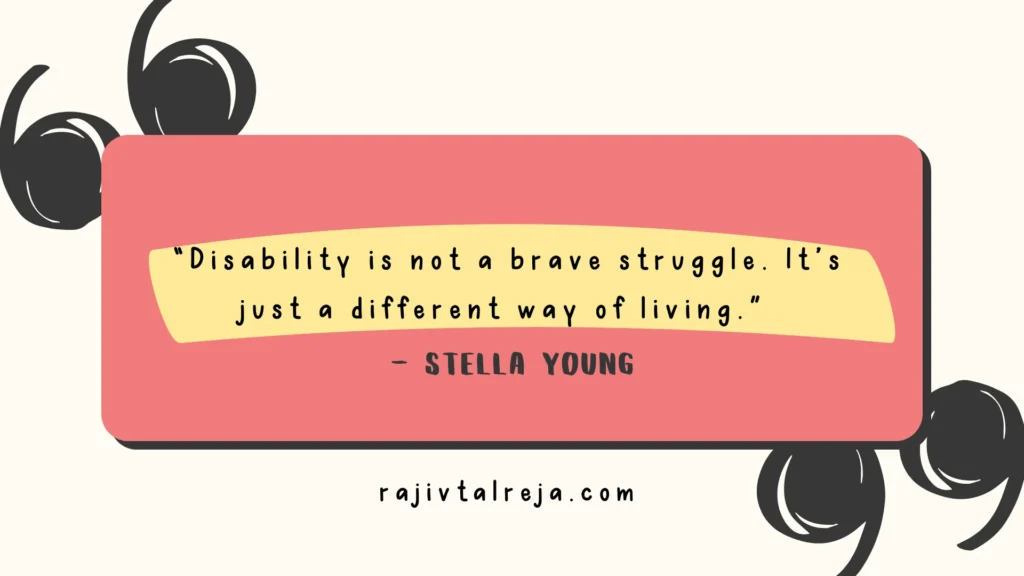
“Disability is not a brave struggle. It’s just a different way of living.” – Stella Young
So… when you think about disability inclusion in the workplace, it’s not about charity or “doing a favour.”
It’s about recognising ability, real ability, that often gets overlooked.
And with the International Day of Persons with Disabilities coming up on December 3rd, it’s the perfect moment for you to ask yourself: “Is my workplace truly inclusive? Am I creating space for all kinds of talent?”
Because here’s the truth! People with disabilities have dreams, skills, creativity, work ethic, and knowledge just like anyone else. Many are incredibly talented… they just haven’t been given enough opportunities.
By embracing inclusion in the workplace, you’re not only building stronger workplace diversity… you’re building a culture where each & every person feels valued, supported, and capable of growing with your business.
Let’s start by understanding what disability inclusion really means.
Disability inclusion in the workplace simply means creating a work environment where people with disabilities can do their jobs comfortably, grow in their roles, and feel respected, just like any other employee.
It’s about focusing on a person’s skills, not their limitations.
With small adjustments, supportive communication, and the right tools, you naturally build stronger workplace diversity and real inclusion in the workplace.
Inclusion starts with small changes and a mindset that values every human being.
Here’s how workplace diversity (including disability inclusion) helps your business in real, practical ways…
| What Diversity Brings | What It Means for Your Business | Why It Truly Matters |
| Fresh Ideas | Employees think differently and solve problems creatively | Better solutions → Better business decisions |
| Better Teamwork | People learn to respect and support each other | A healthier, happier workplace |
| Stronger Company Values | You build real diversity and inclusion in the workplace | Customers trust ethical, fair businesses |
| Higher Productivity | People feel valued and perform better | Motivated teams scale your business faster |
| Wider Talent Pool | You hire based on skills, not limitations | Many persons with disabilities are highly skilled |
| Positive Brand Image | You stand out as an inclusive employer | Builds customer loyalty & reputation |
| Lower Turnover | Inclusive teams feel secure & stay longer | Saves hiring and training costs |
| Better Problem-Solving | Diverse perspectives spot issues faster | Reduces mistakes and improves quality |
Microsoft runs a Neurodiversity Hiring Program that actively hires people with autism, ADHD, and other neurodivergent conditions.
They focus on skills like pattern recognition, problem-solving, and creativity, not traditional interviews.
Change your hiring process to focus on real skills, not how confidently someone speaks.
Starbucks trains staff to support customers and employees with disabilities. Some stores have sign-language baristas, and they design workplaces that are friendly for all.
A small amount of support and accessibility can make both customers and employees feel respected.
Accenture offers accessible tech tools, assistive devices, learning support, and mentorship for employees with disabilities.
Their goal: equal performance opportunities for everyone.
Tools don’t need to be expensive. Even flexible timings or simple assistive apps can help.
Google hires many employees with disabilities and includes accessibility in its product design.
They provide screen readers, captions, and accessible interfaces to everyone.
When you design your business processes to be inclusive, you automatically make them better for everyone.
Walmart hires thousands of employees with disabilities and trains managers to support them at work.
Their focus: ability, reliability, and long-term growth.
Training your team to work respectfully with all employees builds a stronger workplace culture.
SAP actively recruits autistic employees for roles in testing, analytics, and quality control, recognizing their strengths in focus and detail.
Every disability comes with unique strengths. If you match roles well, performance improves naturally.
Amazon provides ergonomic workstations, voice technology, and a disability support team to ensure employees can work comfortably.
Small physical adjustments can dramatically improve productivity and comfort.
Infosys built accessible offices with ramps, accessible washrooms, special seating, and training programs for employees with disabilities.
Even low-cost physical adjustments make your workplace more welcoming.
Lemon Tree employs a large percentage of people with disabilities and trains them across roles like housekeeping, front desk, and kitchen support.
Hospitality, retail, and service businesses can easily adopt similar training-based inclusion.
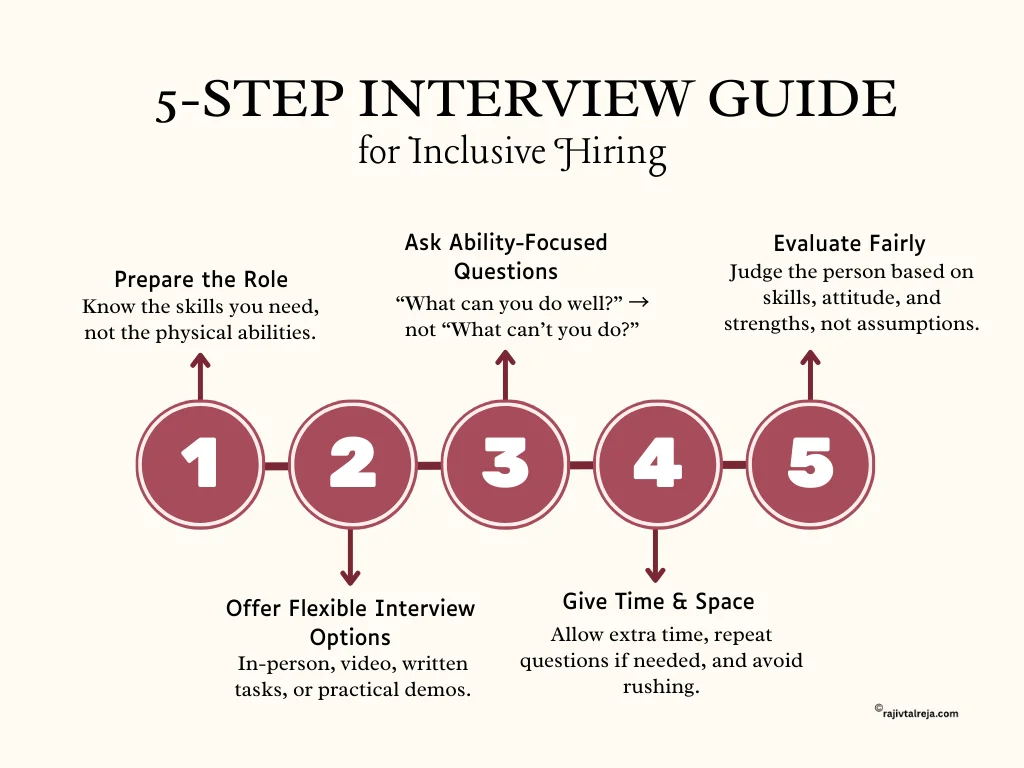
Many people with disabilities are incredibly talented… Analysts, designers, coders, packers, customer support specialists, and more.
Look at what they can do, not what they can’t. Match their strengths to the right role.
You don’t need expensive redesigns. Simple changes make your workplace more inclusive.
Add ramps, rearrange desks for easy movement, provide good lighting, or allow for quieter seating. Small changes → big confidence.
Things like speech-to-text apps, subtitles, screen readers, or amplified audio can help employees work more comfortably.
Try basic accessibility tools and see what supports your employee best.
Some disabilities require rest, medical visits, or specific work timings. Flexibility can change their entire experience.
Allow adjusted hours, remote tasks, or role-specific flexibility.
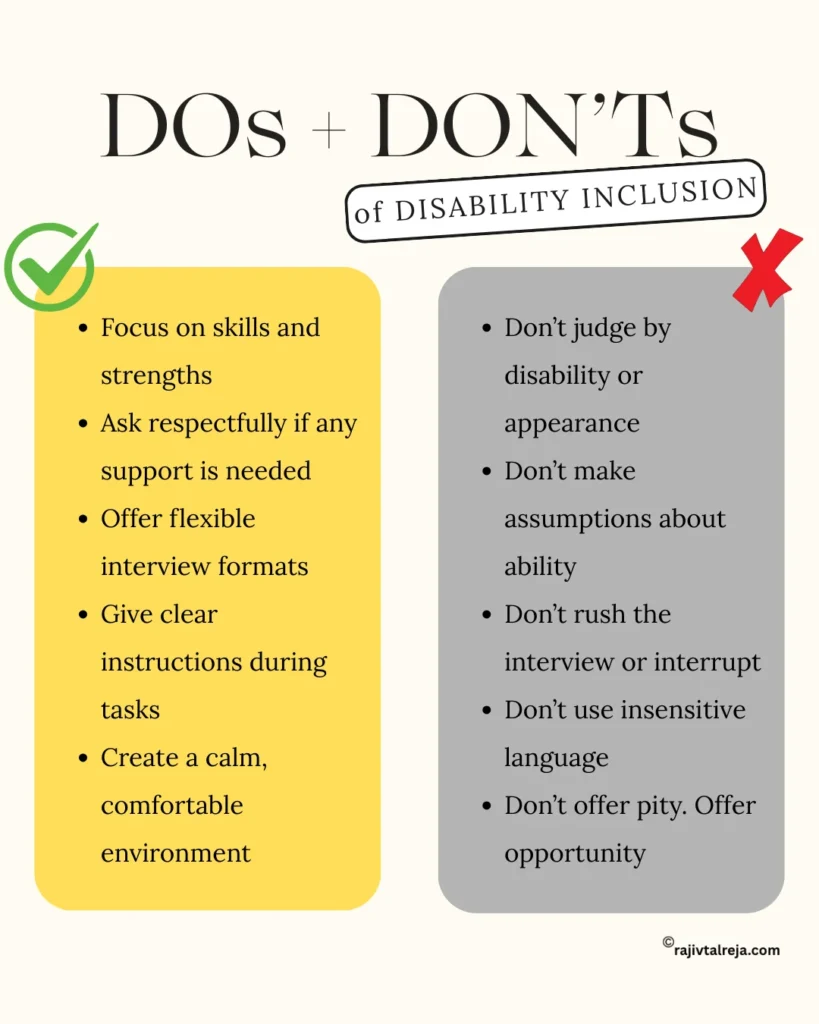
Disability inclusion in the workplace starts with awareness. A respectful team makes everything easier.
Have a simple conversation about inclusion, respect, and what teamwork really means.
Different disabilities come with unique strengths, such as attention to detail, memory, creativity, focus, patience, and accuracy.
Place each employee where their natural strengths shine. It boosts productivity instantly.
Inclusion in the workplace grows when people feel safe, understood, and treated fairly.
Celebrate their wins, ask for feedback, encourage open communication & create a positive culture where everyone feels valued.

At the end of the day, disability inclusion in the workplace is all about heart. It’s about looking at people for who they truly are: skilled, capable, ambitious, and deserving of every opportunity.
And as a business owner, you have the power to create that opportunity.
When you build real diversity and inclusion in the workplace, you’re not just supporting persons with disabilities… You’re strengthening your own team, improving your culture, and building a business that stands for something meaningful.
Most people with disabilities don’t want special treatment. They just want fair chances, respectful workplaces, and the freedom to do the job they’re good at.
And with the International Day of Persons with Disabilities on December 3rd, there’s no better moment to make your workplace more open, more supportive, and more inclusive.
Small steps from you can change someone’s entire career, and make your business stronger at the same time.
Found this blog helpful? Visit our blog page for more insightful blogs like this…
Start by understanding their strengths and comfort levels. Some excel at detail-oriented work, some at customer support, some at creative tasks. Discuss openly and match roles based on skills, not disability.
No. You don’t need certifications to hire them. However, some government schemes offer benefits if you register, but hiring itself is simple and barrier-free.
Not at all. In fact, many businesses report higher productivity. Employees with disabilities often show stronger focus, consistency, and problem-solving skills.
No. Most inclusive practices cost little to nothing… flexible hours, awareness training, reorganising furniture, or using free assistive tools. True inclusion starts with attitude, not money.
Keep it simple: be respectful, ask before offering help, and listen. If you’re unsure about something, asking politely shows maturity and respect, not awkwardness.
A short conversation or basic inclusion training can change everything. Most resistance comes from lack of exposure, not lack of willingness.
Yes! Growth doesn’t depend on disability. Provide learning opportunities, fair evaluations, and chances to take on new responsibilities. They want careers, not sympathy.


