


If you run a small business or factory, you already know how quickly pollution builds up… smoke, waste, chemicals, noise, dust… it all adds up.
And what many business owners don’t realise is this… Industrial pollution hurts your business long before it hurts the environment.
Higher costs. More wastage. Energy loss. Complaints from neighbours. And of course, strict rules you must follow.
That’s why understanding industrial pollution control isn’t just about being compliant. It’s about running your business more efficiently in 2026.
And since National Pollution Control Day (Dec 2nd) reminds us how important responsible operations are, this is the right time to learn how to protect the environment and strengthen your business at the same time.
Before we get into the 9 strategies, let’s quickly understand what industrial pollution actually means for a small business like yours.
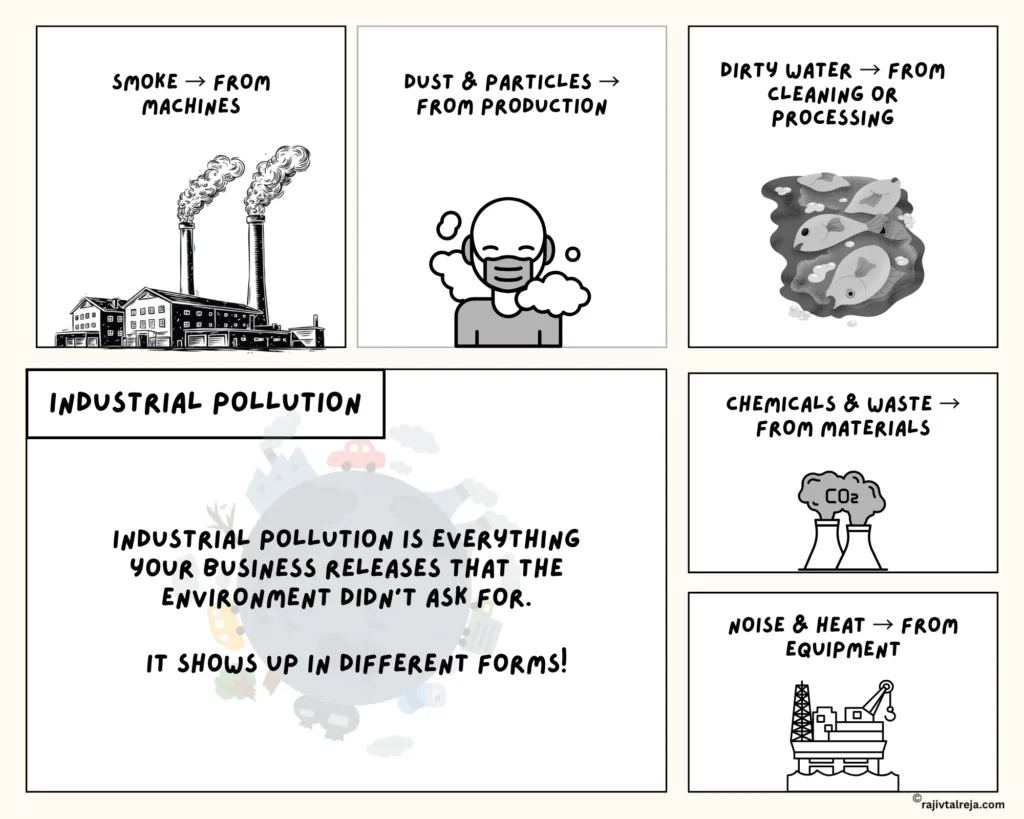
Industrial pollution is simply the “unwanted side-effects” of running your business [the smoke your machine gives off, the waste that piles up, the noise from equipment, or even the dust your workspace creates].
You may not notice it every day… but your workers, neighbours, and even your costs definitely feel it.
The surprising part?
Most pollution in small businesses doesn’t come from big factories. It comes from small habits we rarely think about.
And once you see where it’s really coming from, controlling it becomes much easier (and cheaper) than you’d expect.
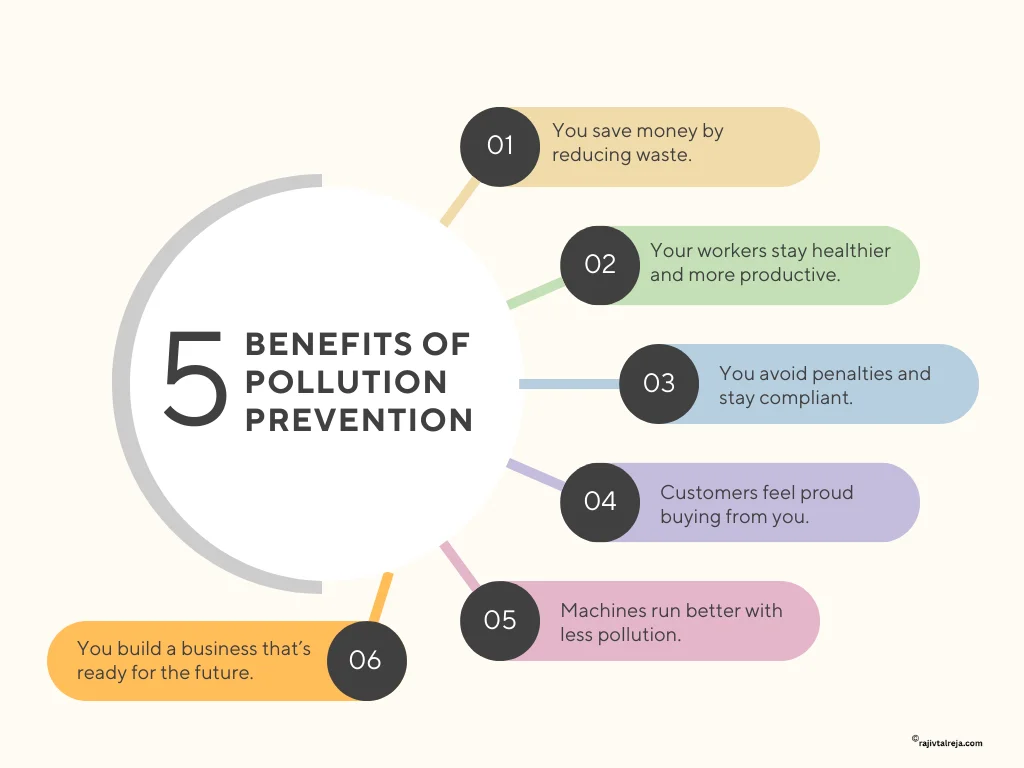
Here’s what happens when you start controlling pollution in your business, and you’ll see how each benefit directly helps you grow.
| Benefit | What It Means for You | Why It Matters |
| Lower Operating Costs | Less waste → less money wasted | Materials last longer, fewer repairs |
| Cleaner Workplace | Healthier workers & safer environment | Fewer sick days, better productivity |
| Better Compliance | You easily meet pollution standards | No penalties, no surprise inspections |
| Higher Customer Trust | People prefer responsible businesses | Builds a strong, ethical brand |
| Better Machine Performance | Less dust, heat & waste | Machines run smoothly → lower maintenance |
| Reduced Environmental Impact | Less smoke, noise, chemicals | Helps your community & reputation |
| Energy Savings | Lower electricity & fuel use | Direct savings every month |
| Stronger Brand Image | “Green business” perception | Great for marketing & partnerships |
Nearly 60% of India’s industrial pollution comes from small and medium businesses, not large factories.
This means your small steps can create massive environmental change, and at the same time, save your business money, energy, and compliance headaches.
Let’s break down pollution control in a way that feels doable, not overwhelming.
Every business has one major source of pollution, such as smoke from a machine, wastewater, dust, or a chemical smell.
When you fix this first source, your pollution reduces dramatically.
Action Step –
This is the simplest and most effective form of industrial pollution control.
You don’t need to replace everything.
Even switching one old, inefficient machine can reduce emissions, lower electricity bills, and improve productivity.
Action Step –
This also helps you move toward air pollution control technologies without big investments.
Most MSMEs don’t know this, but small wet scrubbers, dust collectors, extractors, or carbon filters are extremely affordable now.
Action Step –
Add a dust collector, chimney filter, or extractor to your smokiest zone.
This small move dramatically improves industrial air pollution control and makes your workspace healthier.
Poor waste handling causes odour, pests, fines, and pollution.
Good waste management in business solves all of that in one shot.
Action Step –
Use 3 bins: recyclable, non-recyclable, and hazardous. And make sure your team knows the difference.
This is one of the simplest industrial pollution control measures you can implement.
One generator can release more fumes than an entire workshop. Same with poorly maintained delivery vehicles.
Action Step –
Service vehicles regularly, reduce idling time, and switch to cleaner fuels if possible.
If you’re in manufacturing or transport, this directly helps with automotive pollution and control.
A lot of pollution is linked to the raw materials you use [paints, solvents, chemicals, adhesives, and even packaging].
Action Step –
Switch to one eco-friendly alternative every few months.
Low-VOC paint, water-based adhesives, and eco-friendly packaging… all of these reduce emissions instantly.
You’ll reduce pollution while creating a healthier environment for your team.
Every little bit you reuse saves money, reduces waste, and supports long-term industrial pollution prevention.
Action Step –
Reuse leftover materials, scrap, packaging, and clean water where possible.
Many MSMEs save thousands per year with this simple habit.
Most pollution issues happen because the team doesn’t know better.
One quick training session can reduce half of your waste and contamination.
Action Step –
Teach them…
This alone improves your pollution prevention measures more than any machine can.
A “strategy” sounds big, but it’s actually simple…
Just a small list of what you will improve this year.
Action Step –
Write down these three things for 2026!
This becomes your green environmental strategy, and it guides every decision you make, without overwhelming you.

Even small businesses like yours can lead the way in industrial pollution control by making simple changes, such as better waste handling, cleaner machines, safer materials, and smarter day-to-day habits.
These small steps protect your workers, reduce costs, and help you stay compliant with growing environmental rules.
More importantly, they show your customers and your community that you care.
And with National Pollution Control Day reminding us how important this is, 2026 is the perfect year to start.
Begin with one strategy. Take one action step. Build one new habit.
If you found this useful, you’ll love the other articles on our blog page. They’re simple, practical, and designed to help small business owners grow smarter.
The most common types are air pollution (smoke, dust), water pollution (dirty discharge), noise pollution (machines), and solid waste. Even small units experience at least one of these daily.
Start by reviewing your local Pollution Control Board guidelines. You mainly need proper waste handling, safe storage of materials, and clean emissions. If you manage these well, you’re on the right track.
Yes. Cleaner operations reduce dust, heat, and load on your machines. This means fewer breakdowns, lower maintenance, and smoother production.
Regular machine maintenance. Something as simple as timely cleaning, oiling, and filter changes can cut emissions, reduce noise, and lower energy use, all at almost zero cost.
Yes. Many state pollution boards offer support or subsidies for MSMEs that install basic pollution control equipment, like dust collectors or effluent treatment systems. It’s worth checking your state’s MSME or PCB website.
Absolutely. Many companies prefer suppliers who follow clean practices. Showing that you follow pollution control measures can help you win better clients, especially in the manufacturing and export sectors.
Some industries do. If your business uses chemicals, machinery, generators, or produces waste, you may need a Consent to Operate (CTO) or basic environmental clearance. It’s best to confirm with your local Pollution Control Board.


