


Scarcity marketing is a strategy where businesses create urgency by limiting time, quantity, or access, so customers take action faster.
When something feels limited, it feels more valuable.
For example:
The product doesn’t change. The availability does, and that drives decisions.
Scarcity marketing works because it taps into basic human psychology.
When people feel they might lose an opportunity, they act faster.
If something is limited, we automatically assume it’s more valuable.
Scarcity removes “I’ll think about it later” and pushes action now.
People hate losing an opportunity more than they enjoy gaining one.
That’s why a simple line like “Only 2 left” can do what discounts sometimes can’t.
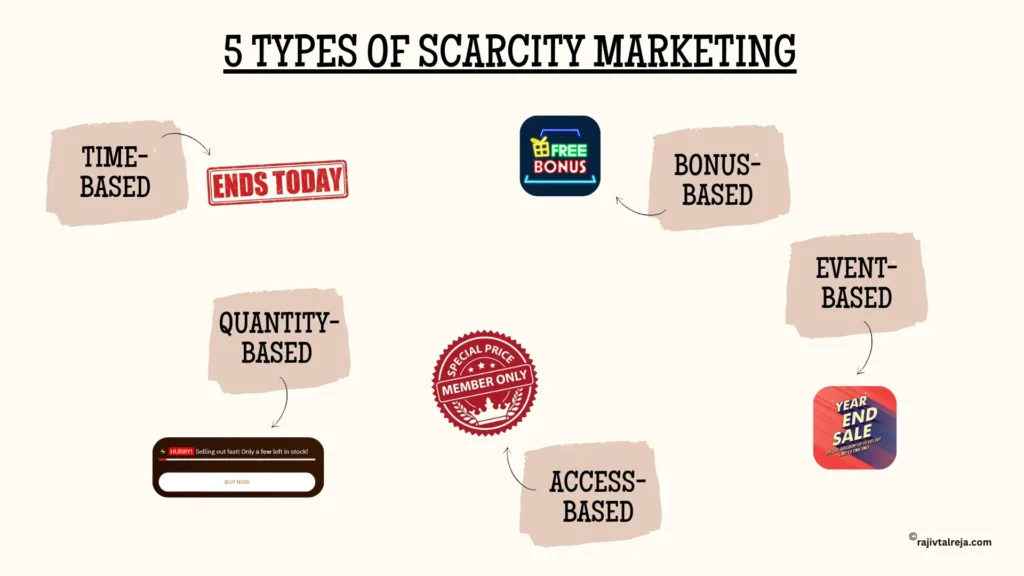
You limit how long the offer is available. This pushes people to act quickly instead of delaying.
Example: “Offer ends tonight” or “Valid till 11:59 PM”
You limit how many units are available. This creates competition. If they don’t buy, someone else will.
Example: “Only 5 items left in stock”
You restrict who can access the offer. This creates exclusivity and makes customers feel privileged.
Example: “Invite-only webinar” or “Members-only pricing”
The product is available, but extra benefits are limited. This increases perceived value without reducing your price.
Example: “Free bonus for first 50 customers”
The offer is tied to a specific event or occasion. Once the event is over, the offer disappears.
Example: “Festive sale” or “Year-end clearance”
The key is simple… Limit something [time, quantity, or access] and clearly communicate it.
Scarcity marketing doesn’t just push people to buy.
It changes how fast and how confidently they decide.
Here’s what it really does for your business:
When there’s a deadline or limited availability, customers stop overthinking and act.
Scarcity moves people from “I’ll think about it” to “Let me take it now.”
If something is limited, it automatically feels more exclusive and valuable.
People notice offers that won’t last. It cuts through the usual noise.
You don’t always need to reduce prices. Urgency itself drives action.
Customers know others might grab it first, so they don’t want to miss out.
You don’t just sell more, you sell faster, which is crucial for business growth.
Used right, scarcity doesn’t feel pushy. It simply helps customers decide faster on something they already want.
You see scarcity marketing everywhere.
The smartest brands don’t just use it. They build demand around it.
Every time a new iPhone launches, stock feels limited.
Result?
People rush to buy, not because they need it immediately, but because they don’t want to wait.
Zara produces limited quantities of each design.
Result?
Customers buy instantly because they know they won’t get a second chance.
That small line under a product does a lot of work:
Result?
It creates urgency without any discount.
While booking hotels, you’ll often see:
Result?
You stop comparing endlessly and book quickly.
Supreme releases products in limited drops.
Result?
Products sell out in minutes, and resale prices go crazy.
Think of drinks like:
Result?
People wait for them every year and buy before they disappear again.
Most businesses understand scarcity. Very few know how to actually implement it.
Here’s a simple way to do it… step by step:
Scarcity only works when something is clearly limited.
Choose one:
Start simple. Don’t try to use everything at once.
People trust scarcity when it makes sense.
Instead of: “Limited offer”
Say:
“Only 15 slots this month to maintain service quality”
“Introductory pricing for first 50 customers”
Always give a logical reason, not just urgency.
Scarcity fails when people don’t notice it.
Add it to:
If it’s limited, it should be seen clearly and repeatedly.
Avoid vague lines.
Use:
Specific numbers and deadlines work better than general urgency.
Tell people exactly when they’ll lose the opportunity.
This pushes action now, not later.
Make it practical for your type of business:
Scarcity should feel natural, not forced.
If you say:
Breaking scarcity breaks trust.
Scarcity works best when it’s not random. It needs to be planned and consistent.
Here are 7 strategies that actually work for small businesses:
Most businesses jump to discounts first.
Instead, try:
This keeps your brand value high while still creating urgency.
Scarcity alone is not enough.
Wrong: “Offer ends today”
Better: “Offer ends today + includes free onboarding support”
Urgency works better when the offer feels worth it.
Perfect for:
Example:
This creates natural scarcity without forcing it.
Help customers see scarcity.
Visibility increases action.
Don’t run offers randomly.
Use:
This makes scarcity feel expected and believable.
One post won’t work.
Repeat your scarcity message:
Repetition builds urgency.
If everything is “limited,” nothing feels limited.
Use scarcity strategically, not daily.

Scarcity works. But fake scarcity backfires.
If customers feel tricked, you may get a sale today, but lose trust forever.
If it’s 10 slots, keep it 10. Don’t create fake urgency.
If every offer is “last chance,” people stop believing you.
“Limited slots due to capacity” feels real. “Limited offer!!!” feels forced.
Scarcity marketing isn’t about pushing people. It’s about helping them stop delaying decisions.
Used right, it can:
The key is simple: Be real. Be clear. Don’t overdo it.
If you found this useful, explore more practical insights on our blog page to grow your business smarter…
The scarcity effect means people value something more when it is limited in availability.
Scarcity limits availability (quantity/access), while urgency focuses on time. Both often work together.
Yes. It helps small businesses increase conversions without relying heavily on discounts.
Yes. It reduces hesitation and encourages faster decision-making, leading to higher sales.
Low stock alerts, limited-time offers, early bird pricing, and exclusive access deals.
By limiting slots, access, bonuses, or time instead of reducing the price.
Yes. It works effectively in emails, websites, ads, and social media campaigns.
E-commerce, coaching, consulting, events, and service-based businesses.
Yes. If overused or fake, it can reduce trust and make customers ignore your offers.


