Human Rights Day is coming up on December 10th.
You might think, Why am I talking about ‘HUMAN RIGHTS and not about BUSINESS as usual?
I understand.
But here’s the truth – As of late 2025, a human rights policy is no longer just a moral good-to-have.
It will become a necessary requirement to do business.
With the convergence of the new Labour Codes and international supply chain pressure, having a solid human rights policy for companies offers protection.
It shields you from lawsuits, financial penalties, and losing major clients.
This blog cuts through the complex talk.
I’ll show you exactly how to build a policy that protects your business without drowning you in paperwork.
Ready to protect your business? Let’s get started.
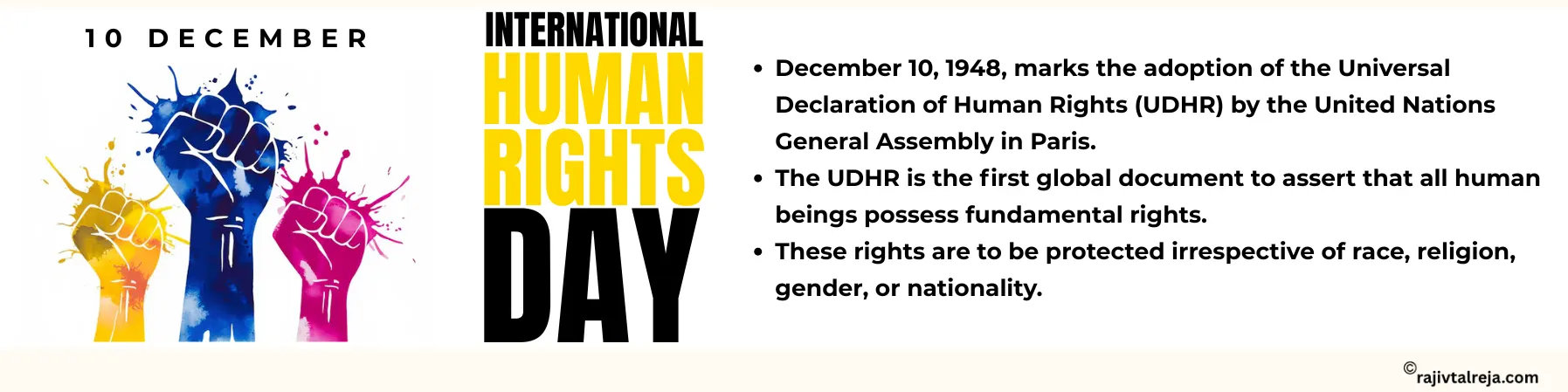
Company human rights policy is the business’s “Constitution.”
It is not just a forgotten paper you stash away to satisfy a government inspector.
It is a written promise about how your business treats its employees, contractors, and even the community near your office or factory.
To put it simply, it bridges the gap between the law (what you must do) and your company culture (what you should do).
While the government protects rights, your role as a business owner is to respect them.
But why does this matter to your bottom line right now?
I’ll explain that next.
You might think, “My team is like family. Why do I need a formal policy?”
That is a fair question.
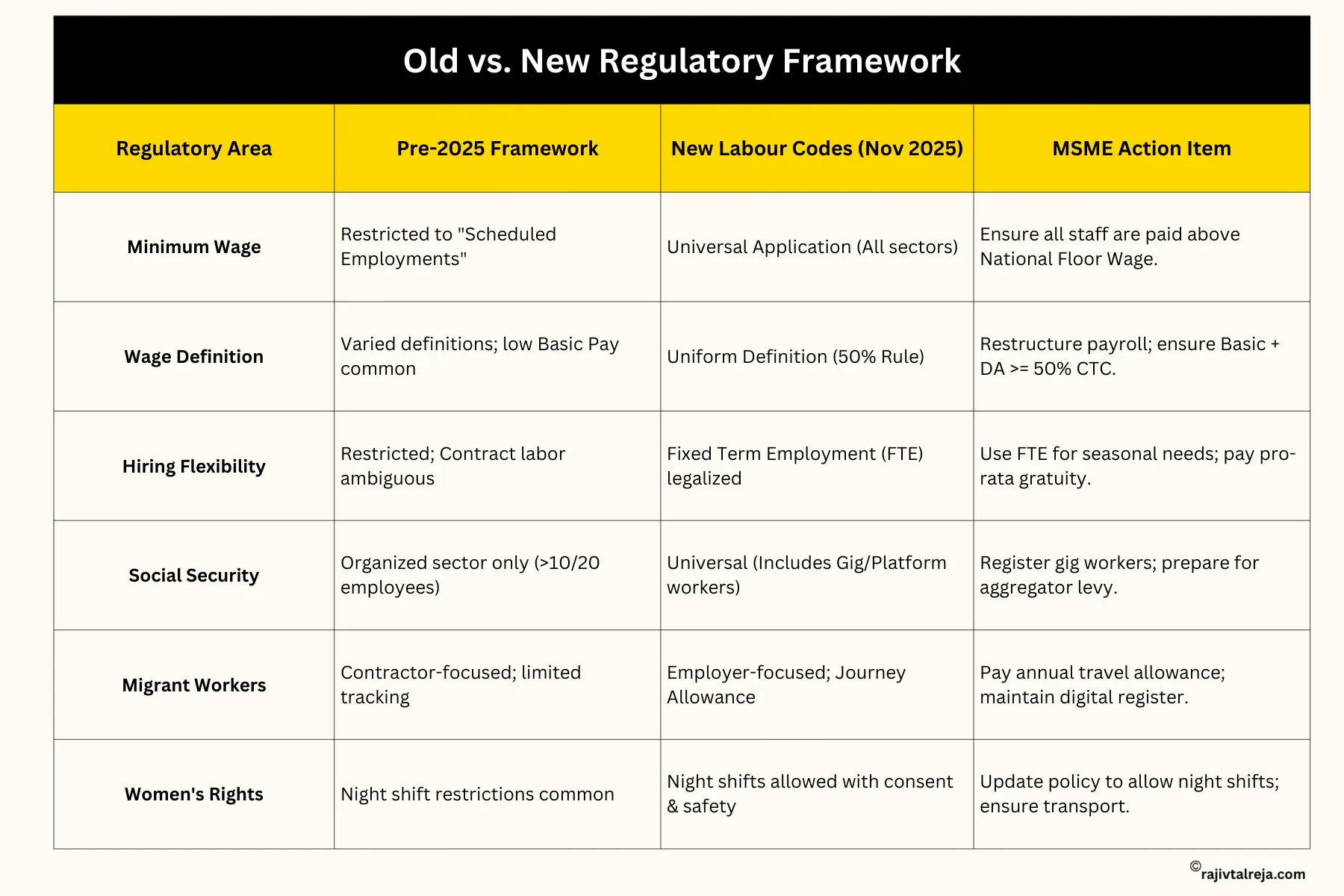
But as of November 21, 2025, India’s labour landscape underwent a major shift with the full rollout of the four new Labour Codes.
These codes consolidated 29 old laws into four. Read here the key legal foundations your policy needs to cover.
Here is why a human rights policy for companies in India is a strategic asset, not a burden –
The new Labour Codes have strict liabilities.
A documented human rights policy for small businesses is your first line of defence if an inspector knocks on your door.
A written policy gives you your best defence if an inspector shows up.
Big Multinational Corporations (MNCs) fear scandals.
They are aggressively cascading human rights requirements down to their suppliers.
If you want to be a vendor for a global brand, you must pass their “Human Rights Due Diligence.”
Skilled labour is scarce.
Workers today prefer employers who guarantee safety and dignity.
A clear human rights policy in the workplace helps keep workers.
Remember that losing workers often costs you money without you realizing it. High attrition is a hidden tax on your profits.
But how should you go about writing the document? Let’s take it one step at a time.
You don’t need to hire a BIG SHOT LAWYER to draft this.
You need a practical, actionable document that your floor manager can understand.
A human rights policy for small businesses should be concise and transparent.
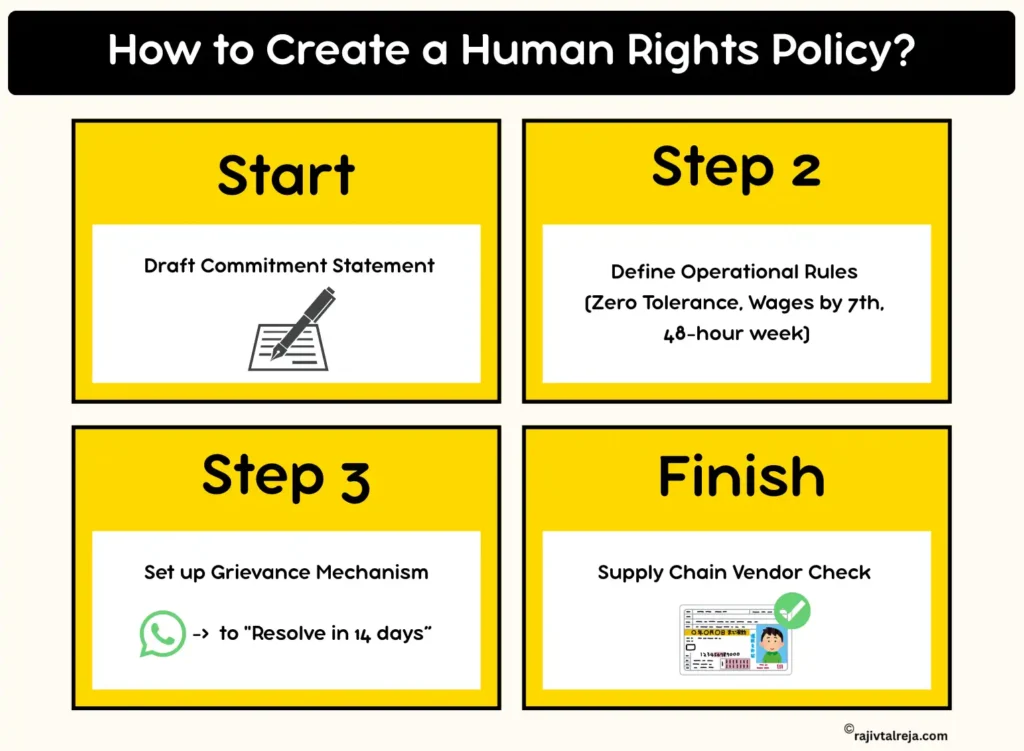
Follow this 4-step framework to build your policy today.
This is the heart of your human rights policy template for companies.
It must be signed by you (the owner) and displayed in a language your workers speak.
Draft –
XYZ Enterprises is committed to conducting business with integrity.
We pledge to treat all employees and contractors with dignity, ensuring a workplace free from discrimination, harassment, and exploitation, in line with the Constitution of India and the NGRBC.
Don’t be vague or cryptic.
Set clear boundaries based on the 2025 Codes.
Explicitly ban child labour and forced labour. Verify age using Aadhaar or 10th-grade certificates.
Commit to paying wages by the 7th of every month.
Stick to the 48-hour workweek. State clearly – “Overtime is voluntary and paid at double the standard rate.”
A human rights policy for companies is pointless if people can’t voice their concerns.
A locked “Complaint Box” or a dedicated WhatsApp number accessible to all workers is enough.
Acknowledge complaints within 24 hours. Solve them within two weeks. Guarantee No Retaliation.
Assure workers they won’t lose their jobs for raising real issues.
You are now responsible for your contractors, too.
Make sure your labour contractors have valid licenses.
If a contractor doesn’t pay PF, the liability falls on you (Principal Employer). Add a clause in your policy that mandates compliance checks for all vendors.
Creating the policy is half of the work.
The other half involves steering clear of mistakes that can lead business owners to court.
Even with good intentions, many MSME owners make mistakes they could avoid.
Paying attention to small details is important when creating a human rights policy in the workplace, especially with growing digital compliance requirements.
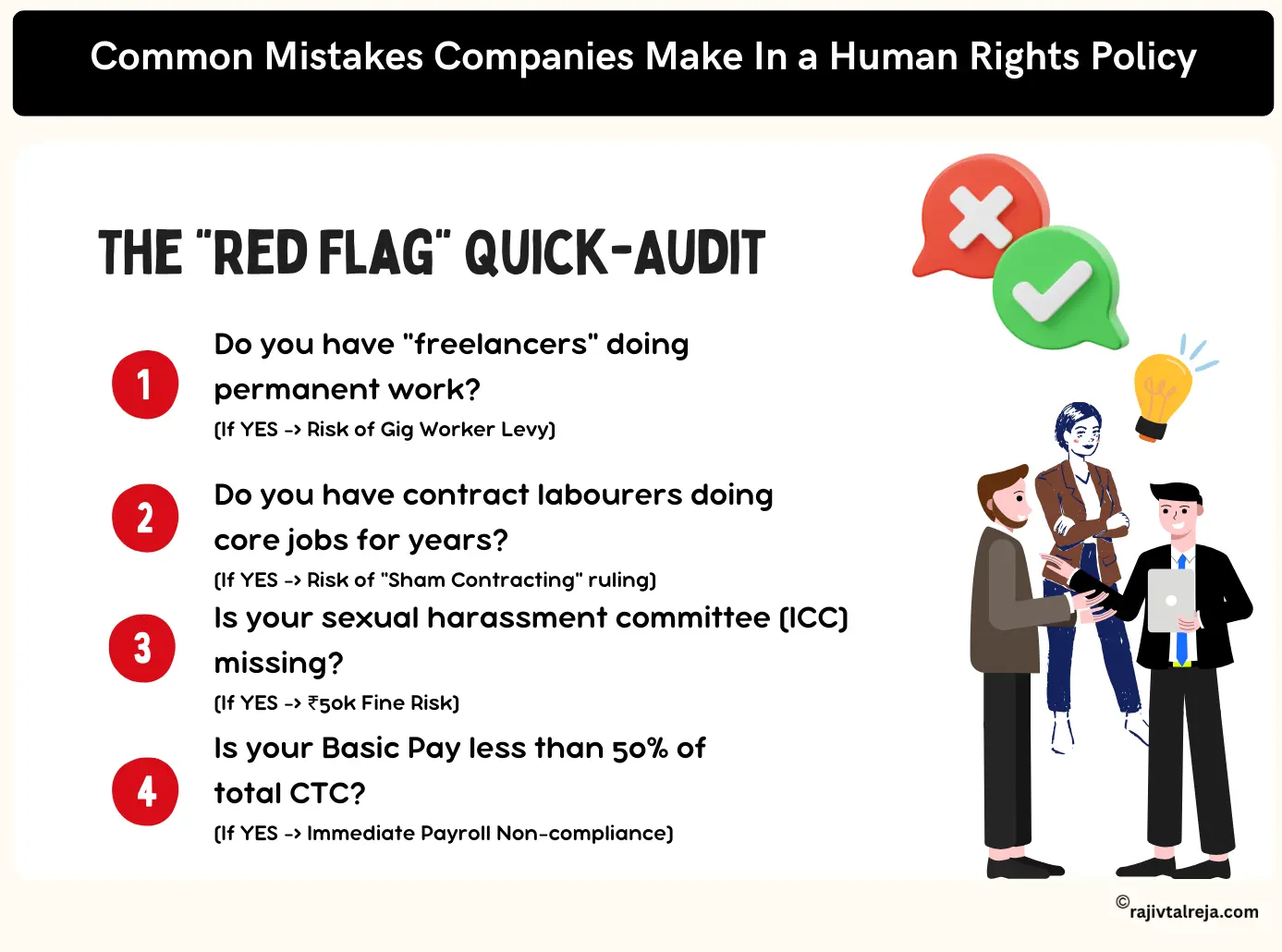
Do you hire freelancers, delivery partners, or consultants to skip payroll taxes?
The Code on Social Security 2025 has closed this option.
The law now covers gig and platform workers. Aggregators might face a 1-2% levy on their turnover.
Don’t treat them as if they aren’t employees when they perform core tasks. Make sure your company’s human rights policy includes them.
This is dangerous.
If you hire contract labour for core, permanent jobs (perennial nature) to save money, courts can deem them as your direct employees.
Go for Fixed-Term Employment (FTE). The new IR Code makes it okay to hire people for set periods (like a year) with full benefits.
It’s a legal way to keep your workforce flexible without breaking rules.
Don’t just download a generic human rights policy example from ANY website.
It won’t mention the Indian “ICC” for sexual harassment or the specific “Basic Pay” definitions.
Customize the template. Include references to Indian-specific laws such as the Factories Act or the Code on Wages.
With digital systems connecting government bodies, the tax and labour departments now share details.
If your tax filings show high labour expenses but your PF returns mention very few employees, expect a notice.
| What You Should Do Next? This week, conduct a Payroll Audit. Check if the Basic Pay makes up at least 50% of the CTC for all your employees. If not, restructure it before the next financial quarter. |
| If you are worried about these kinds of traps, you need a solid system. Our business coaching services help you build a compliant, system-driven business that runs without stress. |



The rollout of the Labour Codes in 2025 sends a strong message before Human Rights Day – The time for operating under the radar is over.
For an MSME owner, having a human rights policy for companies is not only about avoiding fines.
It helps upgrade your business foundation and shift your image from being a low-cost labour provider to a preferred partner for global clients.
Yes, compliance will cost money.
But the cost of ignoring these rules through legal battles, strikes, or lost contracts will be much higher.
Want to learn more about systems? Explore our blogs on MSME growth today!
Yes. The Code on Wages and NGRBC principles apply to every establishment. POSH applies even if you have 1 employee.
No. It’s an internal governance document. It just needs to be signed by the owner, dated, and communicated to employees (email or notice board).