


Negative cash flow happens when more money goes out of your business than comes in during a specific period…
In simple terms, it means that your business is spending cash faster than it’s receiving it.
This can happen even if your business looks profitable on paper. That’s why many MSME owners feel confused when sales are happening, but cash is always tight.
Result?
Cash goes out first → negative cash flow, despite sales.
This is why understanding what is critical for running a sustainable and profitable business model, especially in 2026, when costs and credit cycles are tighter.
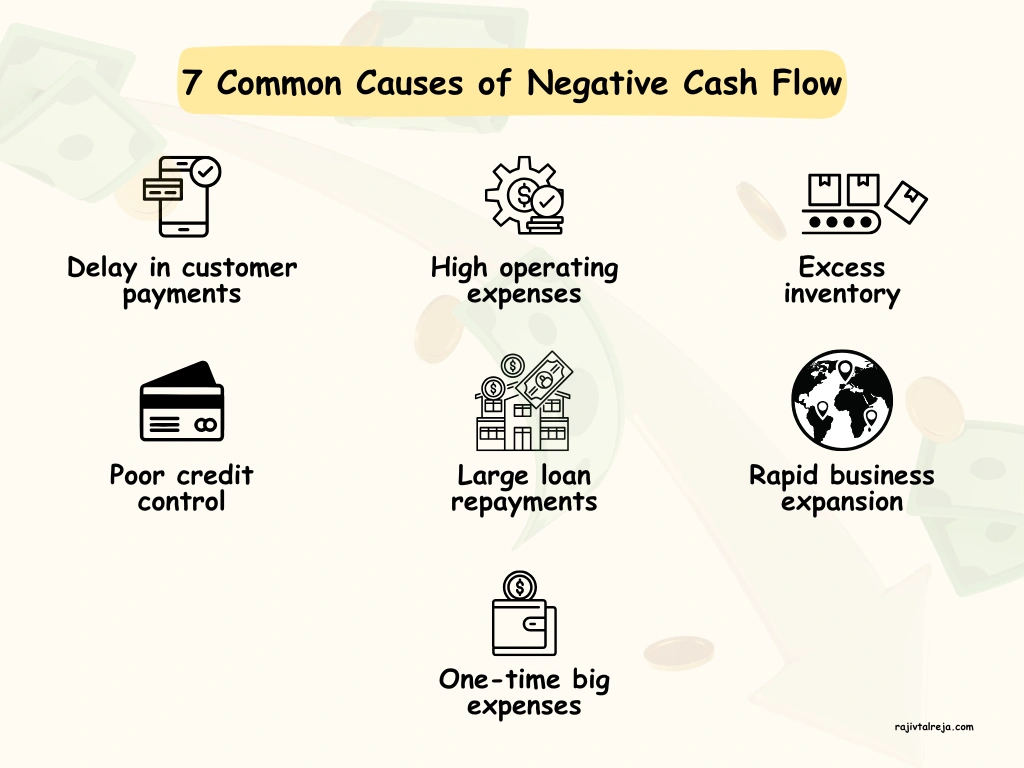
| Cause | How It Creates Cash Loss? |
| Delay in customer payments | Cash comes in late, but expenses are immediate. |
| High operating expenses | Salaries, rent, and overheads drain cash quickly. |
| Excess inventory | Money gets stuck in unsold stock. |
| Poor credit control | No follow-up on receivables. |
| Large loan repayments | Outflows exceed monthly inflows. |
| Rapid business expansion | Growth consumes cash faster than expected. |
| One-time big expenses | Equipment or setup costs reduce available cash. |
These cash flow issues often show up clearly in a cash flow statement…
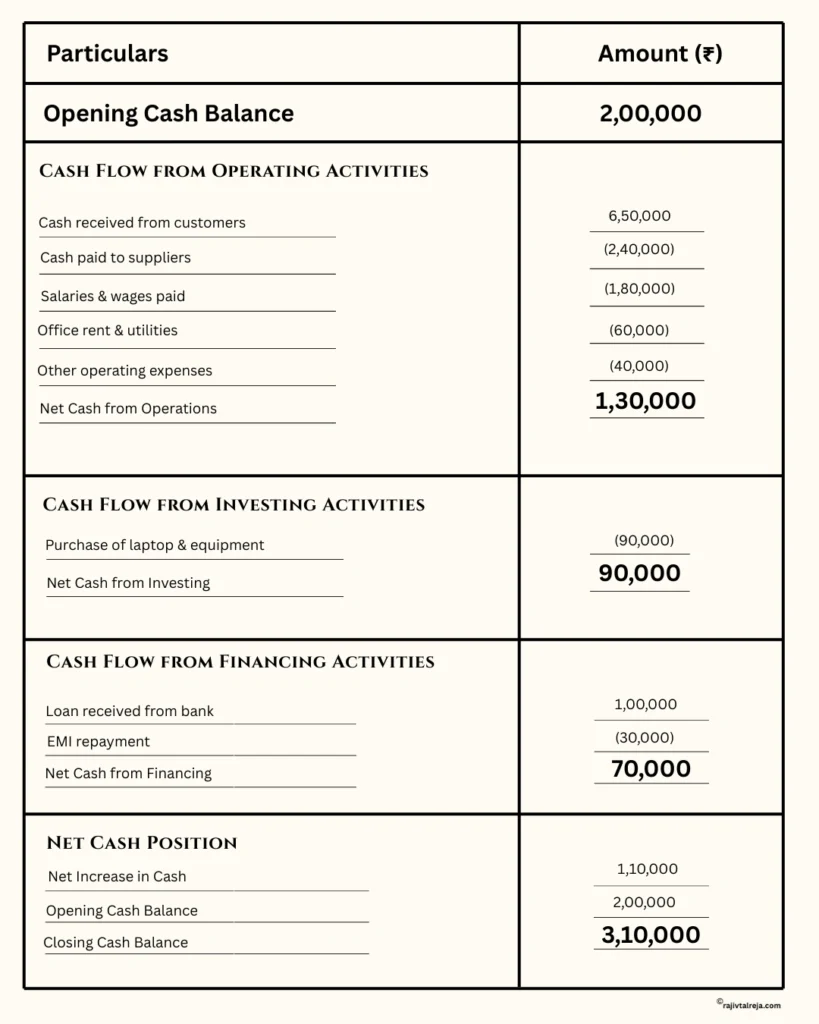
A negative cash flow statement shows that your business has more cash going out than coming in during a specific period.
It tracks cash movement across three areas…
If total cash outflows exceed total cash inflows, the statement reflects negative cash flow.
| Important to note! A negative cash flow statement doesn’t always mean losses, but it signals cash stress that needs attention. For MSMEs, regularly reviewing this statement helps in managing cash flow before it becomes a serious business risk. |
Negative cash flow is dangerous for small businesses because it affects daily survival, not just long-term growth…
Here are the effects of negative cash flow on MSMEs.
One of the biggest disadvantages of negative cash flow is that it can hurt a profitable business model if not managed on time.

Negative cash flow can come from different parts of your business. Understanding the types helps you fix the right problem.
| Type | What It Means | Is It Always Bad? |
| From Operating Activities | Core business operations spend more cash than they generate | Usually a warning sign |
| From Investing Activities | Money spent on assets, equipment, or expansion | Often acceptable |
| From Financing Activities | Cash outflow due to loan repayments or dividends | Depends on context |
A negative cash flow statement may show one or more of these at the same time. The key is knowing where the cash problem is coming from.
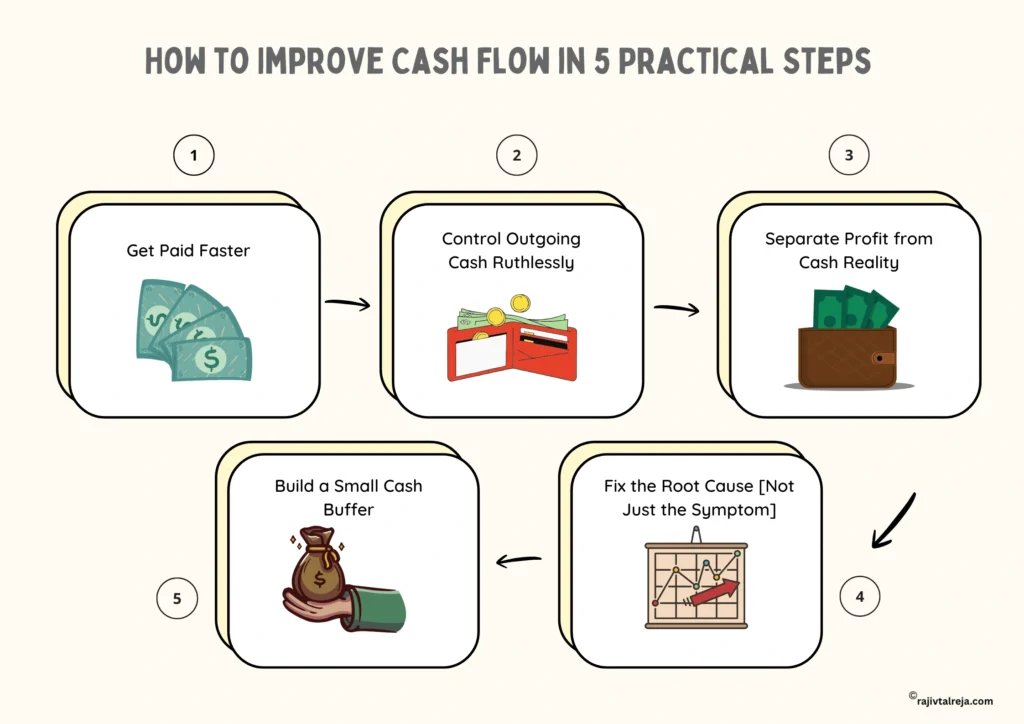
These steps focus on fixing cash flow, not just tracking it. You can start applying them this month.
Most issues come from delayed collections.
What to do:
This directly helps in managing cash loss from operating activities…
You don’t need to cut costs blindly. You just need to control the timing.
What to do?
This will help you reduce the effect of cash burn on daily operations.
Many MSMEs are profitable but still struggle with cash…
What to do?
A profitable business model still needs healthy cash flow to survive.
Ask: Where is cash getting stuck?
What to do:
This is how you handle loss from financing activities or investing decisions.
Even a modest buffer reduces stress and panic decisions.
What to do:
This protects you during short-term loss from investing activities or seasonal dips.


Negative cash flow doesn’t mean your business is failing, but it does mean your business needs attention.
Many MSMEs face cash loss at some point, even with strong sales and a profitable business model…
The key is understanding where the cash gap is coming from and acting early to fix it.
By tracking your cash flow statement & building a small buffer, you can regain control and improve cash flow in 2026 with confidence.
For more practical business insights, financial clarity, and growth strategies designed for MSME owners, visit our blog page for more useful content like this.
It means your business is paying out more cash than it receives during a specific period, even if your sales or profits look healthy…
In 2026, you can improve your cash flow by collecting payments faster, controlling expenses, reviewing cash flow weekly, negotiating supplier terms, & building a small cash buffer.
A few popular tools include Tally, Zoho Books, QuickBooks, & Vyapar, which help track inflows, outflows, and cash flow statements in real time.
Apps like Zoho Books, Float, CashAnalytics, and QuickBooks Cash Flow Planner offer forecasting features to predict and prevent cash shortages.
Your business credit lines can be used to cover short-term cash gaps, but they should support working capital, not replace poor cash flow management.
Not always. Loss from investing or growth can be normal, but loss from daily operations is a warning sign.
It indicates that total cash outflows exceeded inflows during a period, signalling cash stress that needs attention.
100% Free Cash Flow (FCF) conversion means the business converts all its accounting profits into actual cash, indicating strong financial health.
Yes, temporarily. However, long-term survival requires fixing the root cause. Otherwise, even profitable businesses can fail due to cash shortages.


