When you hear the name Ratan Tata, you think of calm leadership, especially during tough times.
And as we are in November, conversations about the Mumbai 26/11 Taj Hotel attack naturally return.
But for you, as a business owner, this event also offers powerful crisis management strategies and ways to protect people when everything feels unpredictable.
This case study breaks down what happened, how Ratan Tata responded during the Tata Group crisis, and the simple leadership lessons you can use in your own MSME without overcomplicating it.
Let’s start with a quick refresher… “What actually happened that night?”
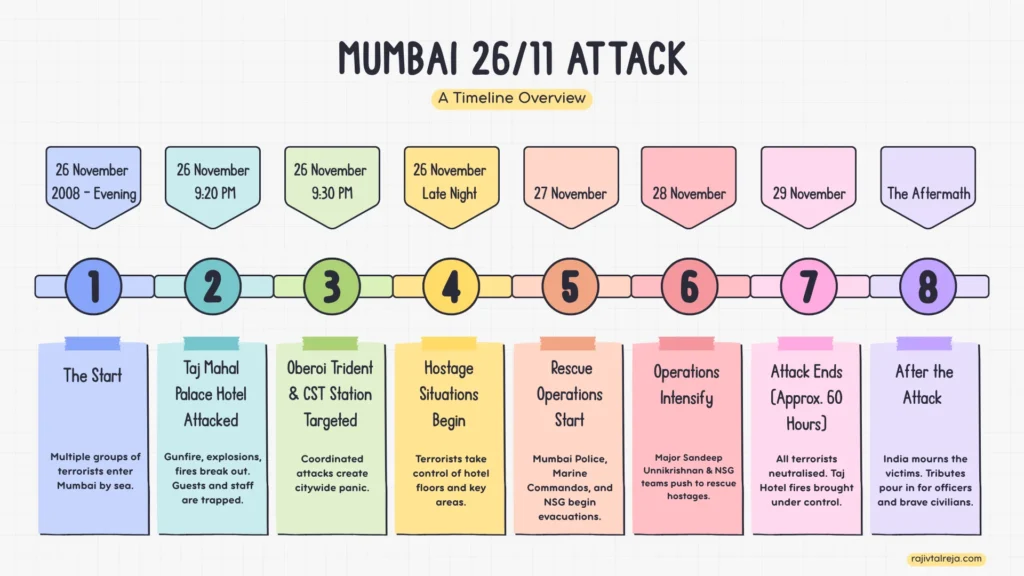
On 26 November 2008, Mumbai faced one of its darkest nights.
Among the places targeted was the iconic Taj Mahal Palace Hotel, where guests, staff, and security personnel were caught in the chaos.
Brave officers, including Major Sandeep Unnikrishnan, fought to protect lives, and their courage is something India will always remember.
For the Tata Group, this wasn’t just a security incident. It became a human crisis affecting their people, their brand, and their future.
And this is where Ratan Tata’s leadership quietly started shaping one of the strongest crisis responses India had ever seen.
Now, let’s look at HOW Ratan Tata stepped in and why his role mattered so much.
When the Taj Hotel attack happened, Ratan Tata didn’t respond like a distant chairman.
He showed up, literally and emotionally.
His actions became a guide for leadership in crisis.
Not for the media, but to meet employees, families, and survivors.
No hierarchy, no protocol. Just human leadership.
From medical help to financial support to long-term care.
His first question wasn’t, “How much damage?”
It was, “Is everyone safe?”
At a time when panic could’ve spread across the brand.
This matters because a crisis reveals the real leader.
And during the Tata Group crisis, Ratan Tata showed exactly what strong, compassionate leadership looks like.
Next, let’s look at the simple but powerful crisis management strategies he used… Strategies any business owner can learn from.
Scale your business with proven strategies that have helped 1000s of business owners like you!


During the Tata Group crisis, Ratan Tata didn’t rely on big statements or corporate manuals.
He focused on simple, human-first actions that protected people and rebuilt trust.
And you can apply the same thinking to your business, even on a smaller scale.
Ratan Tata didn’t stay behind closed doors.
He showed up at the Taj, walked the site, met families, and stood with employees.
Medical support, compensation, job security… Everything was promised FIRST, without hesitation.
No confusion, no mixed signals. Employees knew what support they would receive and what came next.
In a crisis, speed builds confidence.
Ratan Tata made decisions fast and, most importantly, stuck to them.
The Tata Group extended help even to the families of railway workers, police personnel, and others affected by the attack.
He met families personally and listened. That’s a leadership quality you can’t fake.
He didn’t rush reopening. He focused on rebuilding trust and restoring dignity before restoring operations.
These crisis management strategies turned a tragedy into a powerful example of responsible leadership…
Something MSME owners can learn from in any difficult situation.

You may not run a giant hotel chain, but the leadership qualities Ratan Tata displayed during the Taj Hotel attack can transform any business, even a small team of 5 or 10 people.
Here are the lessons that truly matter for you!
In tough moments, your team looks at you first.
Your presence alone can calm fear and build confidence.
When you support employees in crisis, they support your business for life.
Silence creates panic. Clear updates, even small ones, keep everyone aligned.
In a crisis, slow action is risky.
Move fast, stay practical, and adjust when needed.
Ratan Tata didn’t just manage the crisis. He FELT it. Empathy builds trust, something money can’t buy.
How you behave in difficult situations becomes your long-term reputation.
You don’t need a fancy plan. just clarity on…
These simple, human leadership lessons can help any MSME owner navigate unpredictable situations with strength and stability.
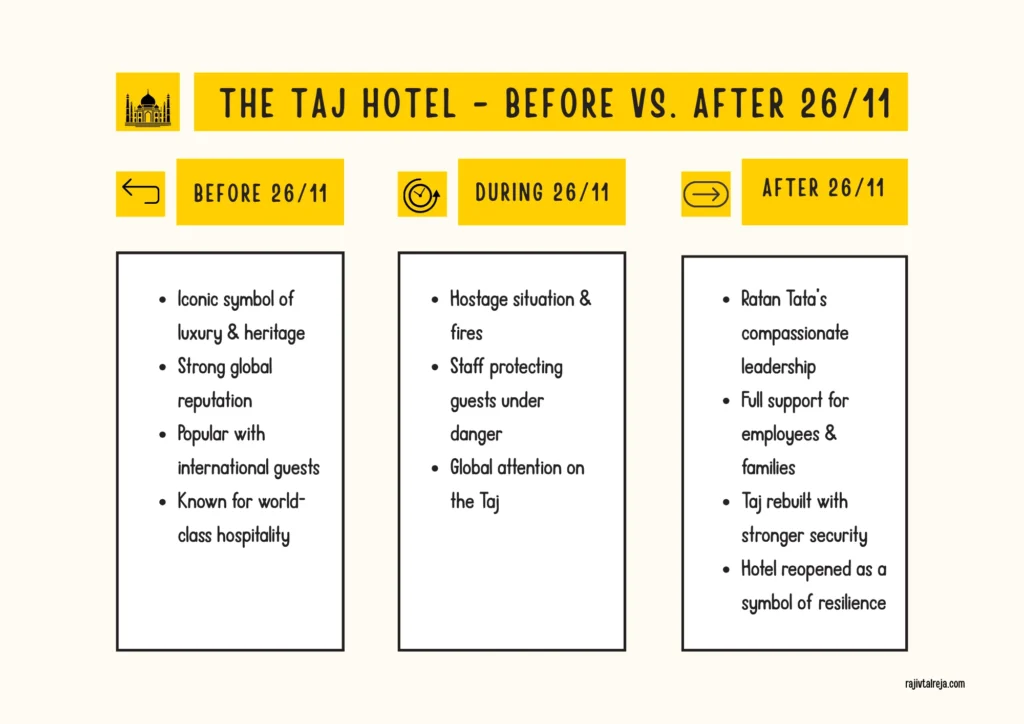
The recovery of the Taj Hotel after the attack was more about repairing walls.
It was about restoring trust, confidence, and dignity.
And the way the Tata Group handled it became a global example of thoughtful rebuilding.
Here’s what stood out…
There was no rush to reopen for publicity.
The focus was on safety, honouring those affected, and bringing back the hotel’s spirit step by step.
No one was fired.
No salaries were cut.
Every employee got full support until they could return to work.
The company ensured long-term assistance for employees’ families… A rare move in corporate India.
Instead of hiding what happened, the Taj demonstrated how security, systems, and training had improved.
The Taj didn’t just focus on the building.
It focused on people, their confidence, their emotional well-being, and their sense of purpose.
Their comeback was quiet, dignified, and deeply human, proving that strong leadership can turn even the worst crisis into a story of resilience.
Crisis doesn’t create leaders. It reveals them.
Ratan Tata’s response during the Taj Hotel attack shows how empathy, clarity, and quick action can guide any business through its toughest moments.
Even as an MSME owner, these simple principles can help you lead with confidence when challenges show up unexpectedly…
Hope you found this blog helpful…
For more business case studies and leadership lessons, visit our blog page.



On 26 November 2008, multiple locations in Mumbai were attacked by terrorists, including the Taj Mahal Palace Hotel, Oberoi Trident, CST station, and other public places. The attack lasted nearly 60 hours and resulted in many casualties.
Several brave officers and individuals became national heroes, including Major Sandeep Unnikrishnan, Tukaram Omble, NSG commandos, Mumbai Police, hotel staff, and civilians who protected others during the attack.
The Taj Mahal Palace Hotel was targeted because it’s a historic landmark, a symbol of Mumbai’s identity, and a high-profile location with international visitors.