


Tourism in India as an industry fuels livelihoods, empowers small businesses, and drives economic growth. That’s why every year, September 27th is celebrated as World Tourism Day…
As a business coach who works closely with MSMEs, I want every tour operator, hotelier, guide, artisan, and hospitality entrepreneur reading this to pause for a moment and feel proud.
Because your work does more than serve travellers… You are contributing directly to the development of the Indian economy.
Tourism is one of the largest & important service industries in India… It creates millions of jobs and boosts countless small businesses. The efforts of the tourism industry business owners are helping to build not just businesses, but also a stronger, more inclusive economy.
This World Tourism Day 2025, let’s take a closer look at the evolution, contributions, benefits, and economic importance of tourism in India, as well as the challenges faced by the Indian tourism industry, and celebrate the vital role you play in this journey.
Let’s get started!
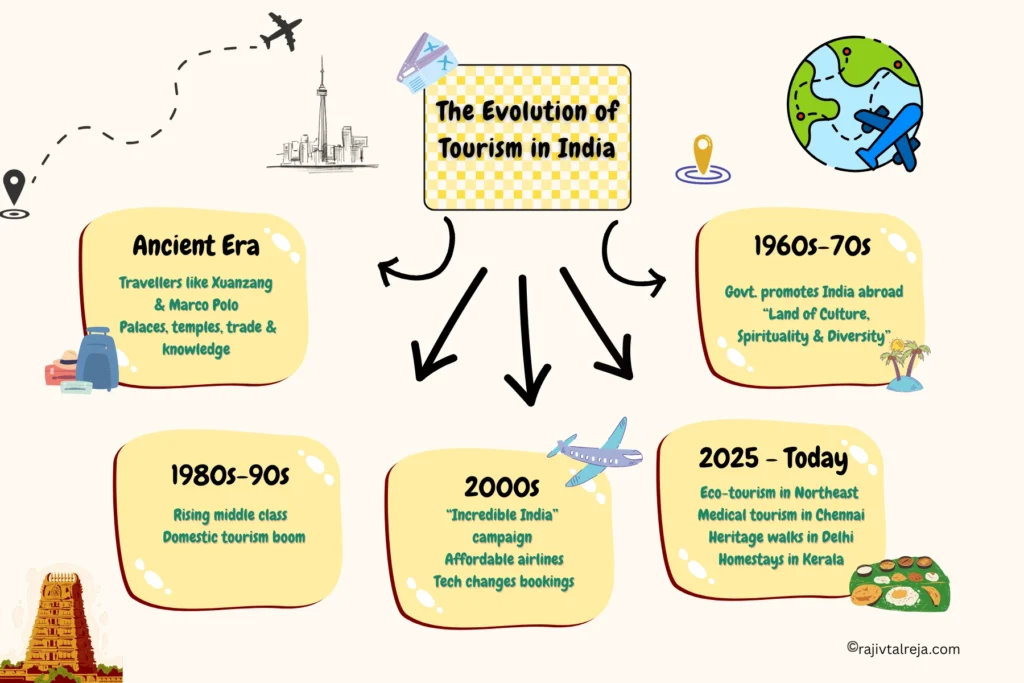
Tourism in India has always been woven into our history, culture, and economy for centuries.
From ancient times when travellers like Xuanzang and Marco Polo visited India for its knowledge and trade, to the days when kings built palaces and temples that now attract millions of visitors, India has always been a land that drew people in.
After independence, India began shaping tourism as an organised sector. The 1960s and 1970s saw the rise of government initiatives to promote India abroad, branding it as the land of culture, spirituality, and diversity.
The 1980s and 90s brought a boom in domestic tourism, as rising middle-class incomes allowed Indians to explore their own country.
Fast forward to the 2000s, and tourism became one of the fastest-growing industries in India.
The government launched global campaigns like Incredible India, airlines made travel more accessible, and technology transformed the way people booked hotels, tickets, and tours.
Today… in 2025, tourism is about experiences.
From eco-tourism in the Northeast, medical tourism in Chennai, heritage walks in Delhi, to homestays in Kerala, the industry has expanded into diverse verticals.
And at the heart of this evolution are small and medium businesses, tour operators, guesthouse owners, artisans, restaurateurs, and guides, who have built this industry brick by brick. Without you, India’s tourism story would be incomplete.
Let’s see a few stats that will help you understand the importance of the contributions of the tourism industry…
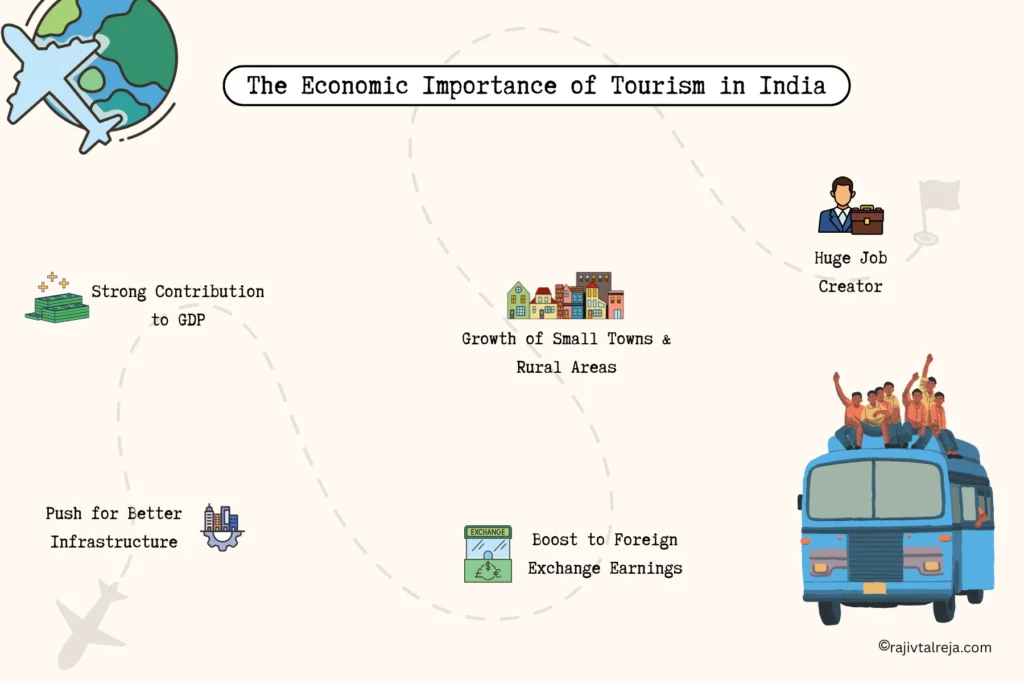
Now let’s talk about the real impact of tourism on the Indian economy, the kind that you, as a tourism business owner, are part of every single day.
Tourism pumps lakhs of crores into India’s GDP each year.
And here’s the exciting part! This isn’t just big hotel chains or airlines… It’s also you. Every tour package, every homestay, every handicraft you sell adds to India’s economic story.
Tourism is one of the biggest employment generators in India. Think about it… Every time a tourist visits, they create work for drivers, guides, cooks, cleaners, artisans, and more.
It’s one of the few industries where both skilled and unskilled workers get opportunities.
Tourists don’t just visit metros. They travel to Ladakh, Khajuraho, Coorg, and Meghalaya.
This brings money into small towns and villages, encouraging regional development and creating jobs in places where industries are limited.
International visitors bring in foreign currency, strengthening India’s reserves.
But here’s the beauty! That money often goes directly to local businesses [the taxi driver, the café owner, the souvenir shop] before it ever reaches big corporations.
Tourism creates demand for better roads, airports, digital connectivity, and public facilities.
These improvements don’t just help tourists. They make life easier for locals and open doors for new business opportunities in tourism and hospitality.
The economic impact of tourism is everywhere…
And the best part? It’s powered by everyday entrepreneurs like you who keep this industry alive.
Tourism has become an engine of economic growth and socio-economic development. Here are five big ways tourism strengthens India’s economy…
From tour guides, hotel staff, and drivers to artisans, restaurateurs, and digital marketers… Tourism creates jobs for millions.
It provides both direct employment in hospitality and travel, as well as indirect jobs in food supply, handicrafts, and transportation.
Tourism directly fuels MSMEs and small businesses.
Whether it’s homestays in Himachal, street food vendors in Delhi, or craft sellers in Rajasthan, local entrepreneurs thrive because of visitors.
This ripple effect supports communities at the grassroots.
Every rupee a tourist spends multiplies across the economy. Hotels earn, local shops benefit, and transport providers see demand.
The economic impact of tourism keeps cash flowing in local economies, especially in the rural and semi-urban areas.
When managed effectively, tourism promotes sustainable practices [including eco-friendly resorts, wildlife conservation, and responsible travel].
It creates awareness about protecting natural resources while generating income for communities.
Tourism sparks innovation.
From adventure tours to medical tourism, wellness retreats to heritage walks, India’s diverse offerings create endless business opportunities in the tourism industry.
It’s a sector where creativity and entrepreneurship can shine.
Tourism is more than sightseeing.
It’s about,
And EVERY tourism entrepreneur contributes to this transformation.

International tourism brings valuable foreign currency that strengthens our economy and supports thousands of tourism businesses across the country.
This foreign revenue doesn’t stay limited to big hotels or airlines. It flows directly into the hands of local artisans, transport operators, homestay owners, guides, and MSMEs, empowering communities at the grassroots.
Here’s a quick look at how India performed in 2023…
After the pandemic slowdown, India witnessed a strong revival in international arrivals.
Tourism continued to be a major contributor to India’s foreign exchange reserves.
| What This Means for MSMEs? More FTAs mean more opportunities for tour operators, boutique hotels, homestays, adventure companies, and handicraft sellers. Higher FEE strengthens India’s economy and creates better income stability for businesses that rely on global travellers. And as India continues elevating its global brand through campaigns, improved connectivity, and diversified tourism offerings, the foreign exchange potential for tourism entrepreneurs will only keep growing. |
International tourism is not just about showcasing India to the world… It’s also about bringing the world’s revenue to India’s local communities, one traveller at a time.
Tourism is powerful, but it’s not without its struggles.
As we celebrate World Tourism Day 2025… It’s also important to acknowledge the challenges Indian tourism businesses face today…
With more players entering the tourism and hospitality space, standing out is harder. Customers now compare everything [price, service, reviews] before making a choice.
While India has improved airports and highways, many tourist spots still suffer from poor connectivity, sanitation, or basic amenities.
This directly affects the visitor experience.
Tourists in 2025 want experiences, not just destinations.
They expect personalised service, eco-friendly stays, digital booking options, and transparent pricing.
Meeting these evolving demands can be tough for small operators.
Many destinations face seasonal booms and off-seasons… which creates uneven income for business owners.
This makes financial planning a particularly challenging task, especially for small businesses.
Over-tourism in fragile areas, such as the Himalayas or Goa, can damage ecosystems.
This creates a responsibility for businesses to balance growth with environmental protection in the tourism sector.
The tourism sector in India needs well-trained staff in hospitality, communication, and digital tools.
But many small businesses struggle to find or afford skilled employees.
From pandemics to economic slowdowns, global events can impact travel overnight. Tourism is often one of the first industries hit and one of the last to recover.
These are real challenges, but none are impossible to overcome.
With innovation, sustainability, and community-driven growth, India’s tourism sector can continue to thrive, and so can you.
On this World Tourism Day 2025, let’s pause to recognise something important… Tourism in India is about YOU.
Every tour operator, guide, hotelier, homestay host, artisan, and restaurateur is part of a sector that adds lakhs of crores to India’s economy, creates millions of jobs, and encourages socio-economic development across towns and villages.
Yes, challenges exist.
But the fact that tourism continues to bounce back stronger each time proves just how resilient this industry is. And that resilience comes from the passion and hard work of its people… Small business owners like you.
So today, take pride.
Because your business doesn’t just serve travellers. It helps build India’s economy, protect its heritage, and showcase its beauty to the world.
Here’s to you, and here’s to the power of tourism.
Did you have a good read? If yes, and you need more insightful articles like this, check out our blog page!
Tourism boosts sales for artisans by increasing demand for local crafts, supporting rural livelihoods and preserving traditional skills.
Digital tools make bookings easier, increase visibility for small businesses, and help attract more travellers online.
It promotes conservation, supports eco-friendly stays, and provides income that motivates communities to protect natural resources.
Domestic tourism drives steady local spending, while international tourism generates higher foreign-exchange earnings.
Government initiatives develop infrastructure, promote destinations, and attract more visitors, boosting jobs and local growth.
Heritage, medical, spiritual, wellness, and adventure tourism generate high spending and strong regional development.
Rural tourism creates local jobs, supports homestays and crafts, and helps villages earn sustainable income.
Festivals attract large crowds, increasing revenue for hotels, transport, markets, and local businesses.
Tourism encourages better roads, airports, sanitation, and connectivity, helping destinations and residents alike.


