


Energy bills are rising every year, and if you run a small business, you already feel it. But a few smart energy conserving techniques can lower your monthly expenses, improve efficiency, and free up money you can invest back into your business.
Most MSMEs can reduce 10-30% of their energy costs with simple changes. Not new machines. Not expensive upgrades. Just smarter habits and better planning.
And with National Energy Conservation Day on 14 December every year, there’s no better moment to rethink how your workplace uses energy. Businesses that adopt energy saving strategies and power saving techniques in 2026 will have a real advantage.
Energy conservation is all about using energy in a smarter, more efficient way.
When you do that, you unlock long-term energy efficiency benefits that go straight to your bottom line.
But before we get into the actual techniques, let’s quickly understand what energy conservation really means for a workplace like yours, and why it matters more today than ever.
Energy conservation in the workplace is simply about using power wisely instead of wasting it. It’s not a technical concept. It’s a smart business habit.
Every light left on, every machine running unnecessarily, every AC on full blast… it all adds up on your electricity bill.
When you use energy saving ideas in the workplace, you’re not only reducing waste… You’re helping your business run smoother and cheaper.
Energy saved = money saved.
Now that you know what energy conservation is, let’s look at the benefits of energy conservation in the workplace.
Here are the top 9 energy saving benefits for MSMEs in 2026…
| Benefit | What It Means for Your Business | Real Impact You’ll Feel |
| Lower Energy Bills | You use less power to run the same operations | Savings every single month |
| Better Efficiency | Machines work smarter, not harder | Fewer breakdowns & smoother workflow |
| Higher Productivity | Teams work in a cooler, well-lit, comfortable environment | Happier, more focused employees |
| Less Wastage | No extra power wasted on lights, ACs, idle machines | Cleaner, more organized workplace |
| Stronger Brand Image | You adopt responsible energy saving initiatives in the workplace | Customers trust you more |
| Future-Ready Business | You adapt to modern energy efficiency for businesses | Ready for rising energy costs |
| Better Compliance | You follow basic conservation techniques | No penalties, no surprise inspections |
| Longer Equipment Life | Machines don’t overheat or overwork | Lower maintenance costs |
| Reduced Carbon Footprint | You contribute less pollution | Good for the planet and your brand |
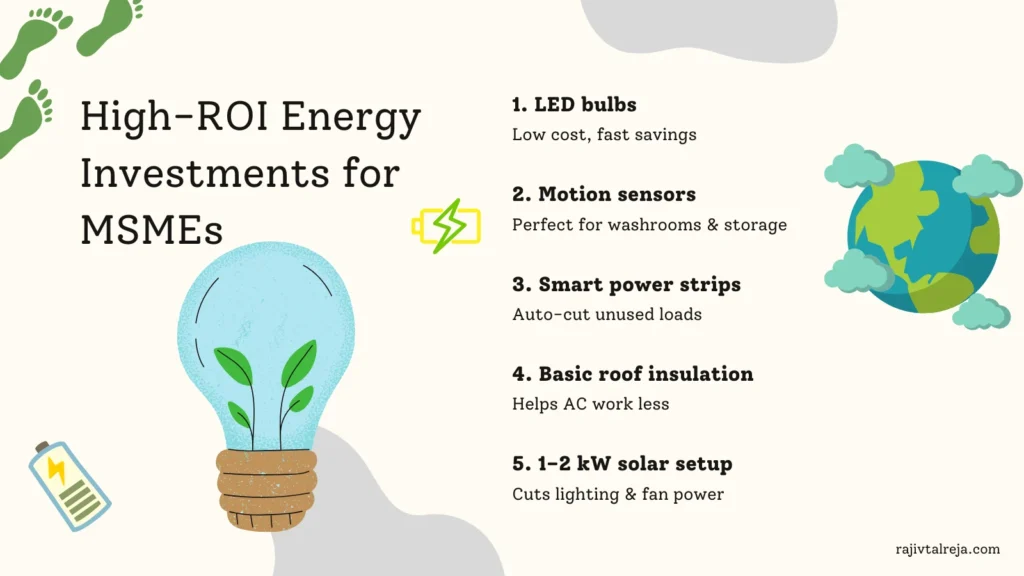
Let’s look at the 11 techniques that have helped big brands to conserve energy and will help you do the same…
Do you know that lighting is one of the biggest energy expenses in MSMEs? Yes, LEDs use up to 75% less power and last much longer than old bulbs.
Add motion sensors in washrooms, storage rooms, or areas your team frequently forgets to switch off.
Example –
Walmart changed millions of bulbs to LED and saved billions in energy costs over the years.
Start with your main working area → replace old lights → add sensors later.
Old equipment drains power. Modern machines are designed for consuming much less electricity, even with the same or better output.
Example –
Tata Motors upgraded motors across factories and reduced energy consumption by over 20%.
Identify the oldest, most power-heavy machine and plan a gradual upgrade. Even one replacement makes a big difference.
Humans forget. Sensors don’t.
Motion sensors and timers turn off lights, fans, and AC units when not needed. It’s saving energy without depending on your team.
Example –
Infosys installed smart sensors across campuses, drastically cutting wasted energy.
Start with one high-traffic area… store room, meeting room, bathrooms.
Your machines become inefficient when dusty, clogged, or poorly lubricated. A simple cleaning schedule can reduce power usage by 10-15%.
Example –
Toyota follows rigorous machine maintenance to avoid energy loss, thereby increasing machine lifespan.
Clean filters, oil moving parts, and check for leaks every month. Create a simple maintenance checklist.
ACs are one of the biggest power consumers in workplaces. A well-maintained AC, at the right temperature, uses far less energy.
Example –
Amazon warehouses use optimized cooling systems that reduce AC usage by managing airflow and temperature zones.
Maintain AC filters monthly, keep the temperature at 24-26°C, and allow proper ventilation.
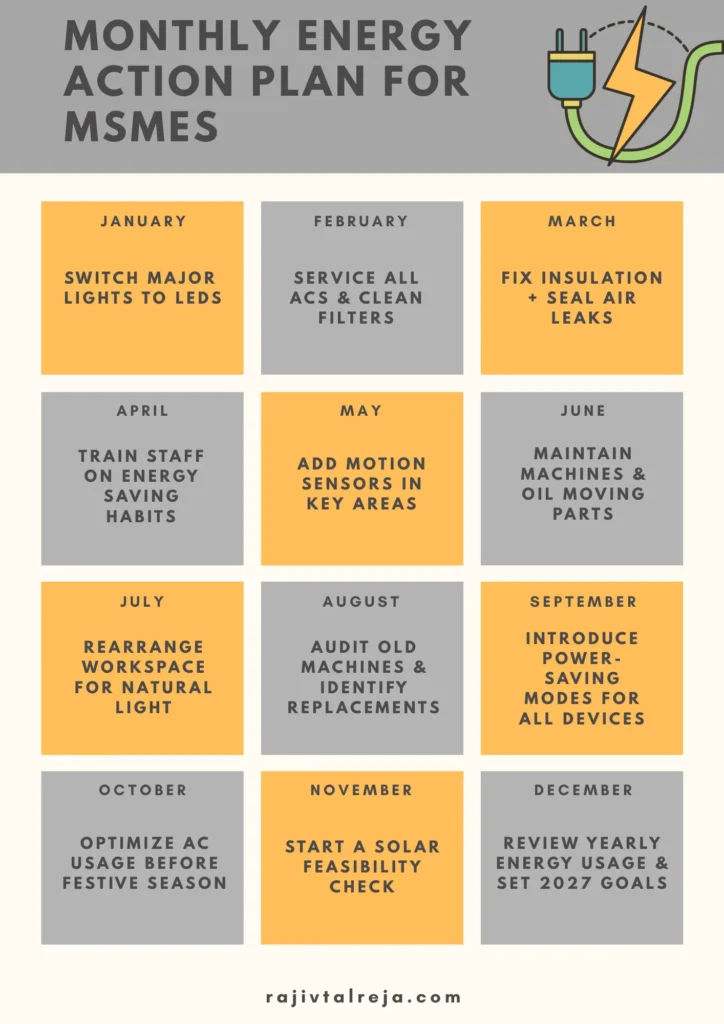
Most workplaces underestimate how much daylight can reduce electricity usage. Rearranging furniture or opening blinds can save hours of lighting cost.
Example –
Apple Stores are designed with large glass façades, reducing daytime lighting needs significantly.
Position workstations near windows and maximize daylight.
Your team plays a major role in reducing energy consumption in the workplace. Simple habits like turning off equipment, unplugging chargers, and minimizing idle time have a huge impact.
Example –
Google promotes team-led energy saving initiatives, giving employees ownership over conservation.
Create a simple “power-off checklist” for employees and paste it near exits.
Solar energy is a long-term investment with strong returns. Even a small rooftop setup can power lights, fans, or office appliances.
Example –
Multiple Indian railway stations are now partially powered by solar. This helps them in saving massive electricity costs.
Start with a small 1-2 kW system to run your lights and fans. This is simple, cost-saving, and future-ready.
Machines left running during breaks or shift changes waste a lot of energy. Reducing idle time boosts efficiency and cuts electricity bills.
Example –
Maruti Suzuki implemented strict idle-time control policies, resulting in major energy savings.
Implement a “zero-idle rule”. If a machine isn’t being used, it must be turned off.
Good insulation means your AC doesn’t have to work harder. Something as simple as sealing gaps or using insulated curtains can reduce energy consumption.
Example –
IKEA uses optimized insulation to maintain indoor temperature efficiently.
Seal gaps in windows/doors, use insulation strips, and prevent heat from entering your workspace.
What you measure improves. By tracking electricity usage, you can spot patterns, identify waste, and adjust your energy saving strategies accordingly.
Example –
Microsoft uses energy monitoring dashboards to track every building’s usage and improve conservation.
Maintain a simple Google Sheet to log monthly units and note changes when applying new techniques.

Small, smart habits and practical energy conserving techniques can make a big impact on your costs, efficiency, and workplace comfort.
When your business uses energy wisely, you save money, protect the environment, and build a strong business.
This National Energy Conservation Day (14 December) reminds us how important responsible energy use is… With this reminder, there’s no better time to start.
If you found this blog helpful and want more MSME-focused articles, tips, and resources, check out our blog page… We’ve got plenty more waiting for you!
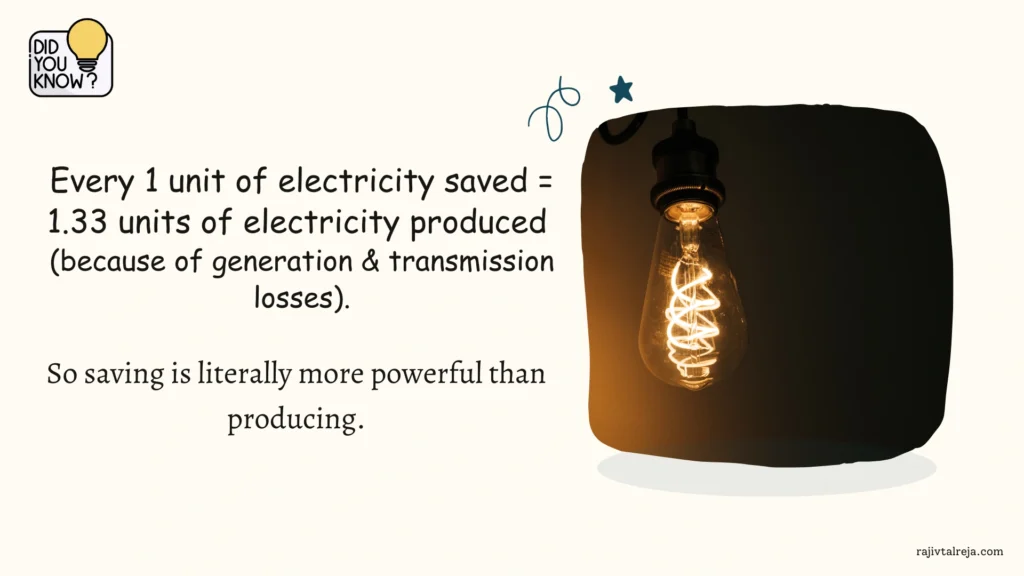
ACs, old machines, poor lighting, and equipment left running when not needed usually consume the most power.
Start by turning off idle machines, switching to LED lights, and maintaining your AC and equipment regularly.
Yes. They use less power, last longer, and reduce maintenance costs, making them cheaper in the long run.
Check it monthly. This helps you catch sudden spikes, identify waste, and measure which energy saving strategies work best.
Switch off unused devices, unplug chargers, clean AC filters, use daylight, and fix air leaks around windows or doors.
Absolutely. Better lighting, comfortable temperature, and reduced noise help employees work with more focus and less fatigue.
Yes. Using less power reduces carbon footprint, supports eco-friendly operations, and strengthens your brand’s reputation.


