


Hiring the right people can transform a business. While skills and qualifications matter, the qualities of a good employee often determine long-term success in the workplace.
Companies today are not just looking for people who can complete tasks. They are looking for individuals who bring the right attitude, adaptability, and mindset to the organization.
These good employee traits help create productive teams, positive work environments, and sustainable growth.
In fact, research shows that soft skills are becoming even more important in modern workplaces. According to LinkedIn data, 9 out of 10 global executives agree that soft skills are more important than ever in the workplace.
Understanding these characteristics can help companies improve finding quality employees and make smarter hiring decisions.
Let’s explore the most important qualities of a good worker that employers consistently look for.
The qualities of a good employee are the behavioural traits, attitudes, and soft skills that make someone effective, dependable, and easy to work with, regardless of their job title or industry.
Think of it this way. Two people can have the same degree and the same work experience.
But one takes ownership, communicates clearly, and solves problems without being told. The other waits for instructions, avoids accountability, and creates more work for everyone around them.
That gap?
That’s the difference between good employee traits and just “good enough.” These attributes of a good employee are what separate the hires that help your business grow from the ones that slow it down.
In a small business, every single team member’s attitude impacts your revenue, your customers, and your peace of mind. You don’t have the luxury of “carrying” weak performers the way larger companies do.
For an Indian MSME paying someone Rs 30,000 per month, that’s a loss of over Rs 1 lakh just on one wrong hire. Add training time, team disruption, and lost productivity and the real cost is much higher.
What we’ve seen time and again, working with business owners, is this: skills can be taught. Attitude cannot.
You can train someone on a software tool in two weeks. But you can’t train someone to be reliable or honest. That’s why hiring quality employees means looking beyond the resume.
Most of those mistakes happen because the focus was on technical ability, not on the positive attributes of an employee that actually drive performance.
Here are the best employee traits we’ve consistently seen in high-performing teams across industries. These aren’t theoretical. They’re the qualities of a good employee, examples drawn from real businesses.
A good employee doesn’t say, “That’s not my job.” They take responsibility for their work and its outcomes. When something goes wrong, they own it instead of pointing fingers.
Example: Your delivery coordinator notices a client complaint. Instead of forwarding it to someone else, they resolve it and then inform you. That’s ownership.
This is one of the most essential qualities of a good worker. Good communicators don’t just speak well. They listen actively, ask the right questions, and give clear updates without being chased.
Example: A team member who sends a short daily update on task progress without being asked. Simple, but powerful.
Business plans change. Markets shift. Processes get updated. Employees who resist change become bottlenecks. The best employees adapt quickly and stay productive through transitions.
Example: Your accounts person happily learns a new billing software when the old one stops working. No drama, no delays.
Can you count on this person to show up, deliver on time, and follow through? Reliability is one of the best employee attributes because it builds trust across the entire team.
Example: An employee who meets every deadline, even small ones, without reminders. That’s someone you can build on.
Average employees bring you problems. Great employees bring you problems with a suggested solution. This quality is what makes someone a real asset, especially in a growing business.
Example: Instead of saying “The vendor hasn’t delivered,” they say “The vendor is delayed, so I’ve contacted our backup, and they can deliver by tomorrow.”
No business grows with solo performers. Finding quality employees means looking for people who work well with others, share knowledge, and support their teammates during crunch time.
Example: Two sales team members with different strengths covering for each other during busy weeks without being asked.
One of the most underrated qualities of a great employee is the hunger to grow. Employees who actively seek feedback, learn new skills, and improve themselves are the ones who become your future leaders.
Example: A junior team member who finishes their tasks early and asks a senior colleague to teach them something new.
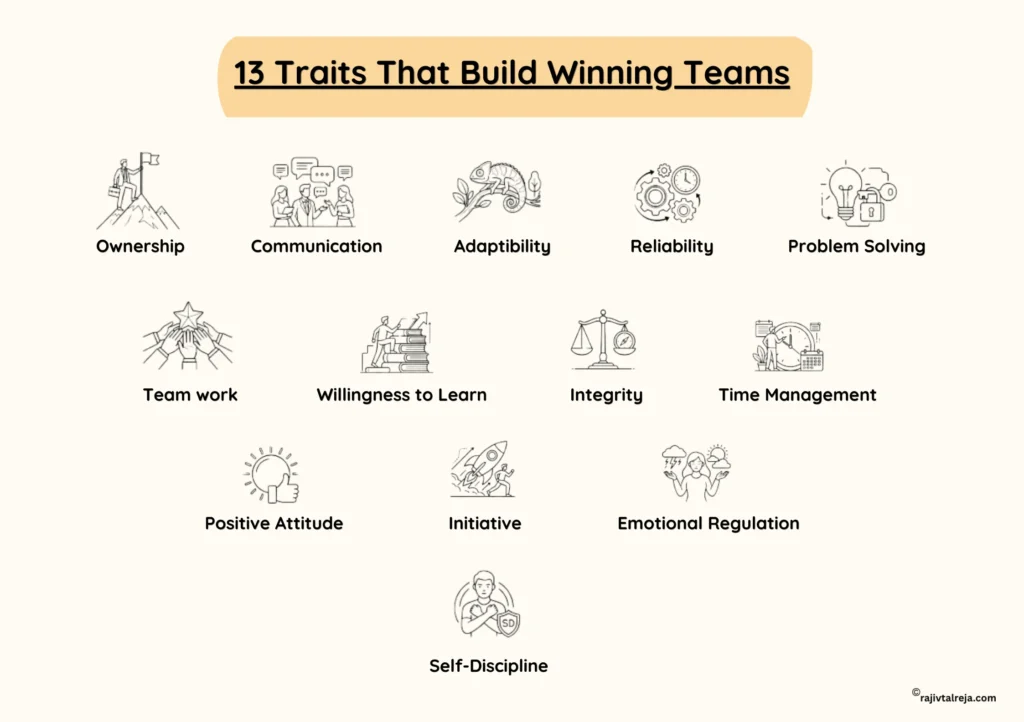
An honest employee is worth their weight in gold. They tell you when something is wrong, admit mistakes early, and don’t hide behind excuses. Trust is the foundation of every strong team.
Example: An employee who reports a billing error they made, even though nobody would have noticed.
Employees who manage their time well get more done without burning out. They prioritise tasks, avoid distractions, and plan their day instead of reacting to everything.
Example: Your operations team member creates a daily task checklist and completes high-priority items first, consistently.
A positive employee doesn’t mean someone who’s always smiling. It means someone who approaches challenges constructively, lifts the team’s morale, and doesn’t spread negativity during tough times.
Example: During a slow sales month, they suggest a new outreach strategy instead of complaining.
Employees who take initiative don’t wait to be told what to do. They identify what needs to be done and act on it. This is one of the most valuable positive attributes of an employee, especially in smaller teams.
Example: A front-desk executive who notices low footfall and starts a follow-up campaign with old leads, without being instructed.
This is one that most people overlook. An employee who can manage their emotions, stay calm under pressure, and handle feedback without taking it personally is an absolute strength for any team.
Example: A team lead who receives tough feedback in a review meeting and responds with “I understand. Let me work on that” instead of getting defensive.
This is the quality that ties everything else together. A self-disciplined employee doesn’t need someone standing over them to get work done. They manage their own schedule, stay focused, and hold themselves to a standard, even when no one’s watching.
For MSME business owners, this is gold. Because the biggest pain point we hear is “I can’t step away from my business for even a day.” That happens when your team can’t manage themselves.
Example: Your warehouse supervisor follows the daily checklist, closes the day’s reports, and locks up properly, consistently, without you ever needing to check.
This comparison can help you spot the difference early when hiring quality employees:
| Quality | Good Employee | Poor Employee |
|---|---|---|
| Ownership | Takes responsibility, fixes issues | Blames others, waits for instructions |
| Communication | Gives clear updates, listens well | Avoids updates, poor listener |
| Adaptability | Embraces change, learns quickly | Resists change, complains |
| Reliability | Meets deadlines consistently | Misses deadlines, needs reminders |
| Problem-Solving | Brings solutions with problems | Escalates everything blindly |
| Integrity | Admits mistakes, stays transparent | Hides errors, takes shortcuts |
| Initiative | Acts without being told | Does the bare minimum |
| Self-Discipline | Manages own schedule, stays focused | Needs constant supervision |
Building a strong workforce starts with understanding the qualities of a good employee.
While technical expertise is important, traits like communication, adaptability, integrity, and teamwork often determine how well individuals contribute to organizational success.
Employers who focus on these best employee traits are more likely to create productive teams, positive cultures, and long-term business growth.
For organizations focused on finding quality employees, evaluating both skills and character during recruitment is essential.
Ultimately, great employees don’t just perform tasks. They add value, inspire teams, and help organizations move forward.
For more such insights, explore our blog page and stay ahead in leadership, hiring, and workplace excellence.
Communication, teamwork, adaptability, accountability, and a strong work ethic.
They improve teamwork, productivity, and workplace culture.
By evaluating both skills and personality during hiring.
Integrity, initiative, communication, and problem-solving.
Taking initiative, collaborating well, and adapting to change.
Consistency, accountability, and willingness to learn.
By improving communication, learning continuously, and staying accountable.


