Environmental protection may sound like a big responsibility, but small businesses play a huge part in it.
Even simple steps, like better waste management, reducing pollution, or choosing greener materials, can make a real difference.
And in 2026, customers notice and trust businesses that care.
Understanding the role of business in environmental protection isn’t just about following rules like the Environmental Protection Act.
It’s about building a responsible brand, cutting unnecessary costs, and doing what’s right for your community.
With National Pollution Control Day on December 2nd, this is the perfect time for MSMEs to learn how even small changes can create a big impact.
Let’s make environmental protection easy, practical, and doable for your business.
It simply means running your business in a way that reduces harm to the environment.
Things like managing waste properly, controlling pollution, saving energy, and choosing greener materials all count.
Even small steps you take every day can make a real difference.
And once you understand how your business can play a bigger role in this, especially in 2026, you’ll see that it’s easier and more beneficial than you think.

The Environmental Protection Act is basically the main law in India that protects the environment.
Think of it as the rulebook that tells every business how to prevent pollution, reduce waste, and operate in a cleaner, safer way.
Here’s the simple version of how it works…
For small businesses, it’s not about heavy paperwork or complex systems.
What the Act really expects is basic responsibility… proper waste disposal, cleaner operations, and habits that protect the environment and the people around you.
Understanding this Act helps you stay compliant, but more importantly, it helps you build a business that runs ethically and sustainably.
And when you pair this with a simple environmental management system, doing the right thing becomes part of your daily workflow.
This law is here to guide you toward cleaner practices that benefit both your business and your community.

You don’t need a big setup to follow the Environmental Protection Act.
Here are five simple steps any MSME can start using immediately:
Separate dry, wet, recyclable, and hazardous waste. This is the easiest form of waste management in business and makes your operations cleaner.
Small habits like fixing leaks, maintaining equipment, and controlling smoke or noise help with everyday environmental pollution control.
Switch to eco-friendly packaging, energy-saving appliances, or basic green environmental technologies that reduce your carbon footprint.
If your business uses chemicals, paints, or machinery, follow simple industrial pollution control practices like proper storage and disposal.
You don’t need a big document. Just write down 3-5 things you’ll improve this year. This becomes your green environmental strategy and guides your daily habits.
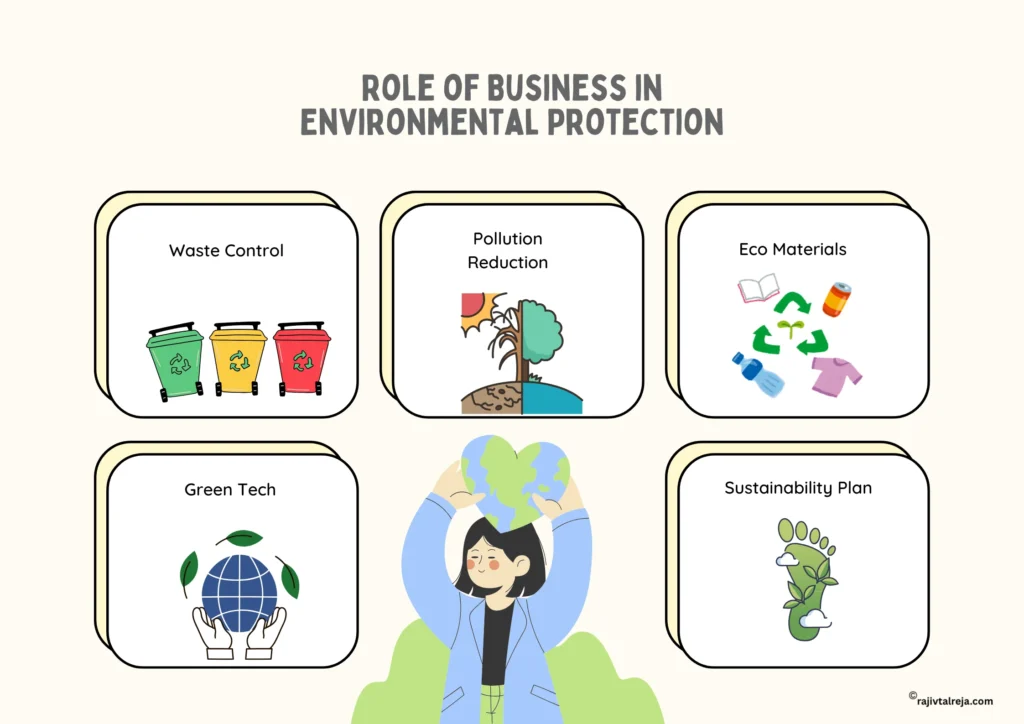
You might not realise it, but your small business has a much bigger impact on the environment than you think, and in 2026, your role becomes even more important.
With rising pollution levels and stricter guidelines under the Environmental Protection Act, businesses of all sizes are expected to follow cleaner, safer and more responsible practices.
Your role in environmental protection starts with very practical actions…
Every business produces waste, such as packaging, raw materials, water, scraps, and chemicals. Your role is to reduce it as much as possible and manage what’s left responsibly.
This means recycling more, throwing away less, and making sure harmful waste doesn’t end up in the wrong place.
Even small changes like segregating waste or reusing materials can make a big difference.
Pollution doesn’t always come from big factories. It often happens through small, everyday habits: smoke from machines, noise, dust, wastewater, or fumes.
Your role is to use simple environmental pollution control steps like cleaning filters, maintaining machines, improving ventilation, and avoiding open burning.
These tiny actions protect your workplace, workers, and surrounding community.
The materials you use decide how polluting your business becomes.
Switching to eco-friendly, low-chemical, recyclable, or biodegradable materials reduces emissions, protects workers’ health, and improves your brand image.
Your role here is to choose smarter alternatives whenever possible.
You don’t need big machinery to be environmentally responsible.
Simple green environmental technologies like energy-efficient motors, dust collectors, LED lighting, solar lamps, or low-emission burners can drastically reduce pollution and save money.
Your role is to adopt small upgrades that create cleaner operations without hurting your budget.
You don’t need a long policy or fancy document.
A simple plan with 3-5 environmental goals for the year, like reducing waste, saving electricity, or improving recycling, is enough.
Your role is to set a clear direction and encourage your team to follow it consistently.
This becomes your business’s own green environmental strategy and guides your decisions with purpose.
These steps aren’t just good for the planet. They’re good for your business ethics, your brand image, and even your long-term cost savings.
Small improvements like better recycling, reduced energy use, or simple industrial pollution control practices can make your business more efficient and more trusted by customers.
And the best part?
You don’t need huge changes.
In 2026, the real role of business in environmental protection is about everyday habits that move you toward cleaner, more sustainable operations, one step at a time.
Now let’s look at why these efforts actually help your business grow.
When you start applying even a simple environmental management system in your business, you’ll notice the benefits almost immediately.
It doesn’t have to be complicated. It’s just a structured way of managing waste, reducing pollution, and using resources more efficiently.
Here’s what it does for you…
Better waste management in business means fewer raw materials wasted, lower disposal expenses, and more efficient operations.
With rules under the Environmental Protection Act becoming stronger, having a system in place makes compliance simple and stress-free.
People love supporting brands that care about the environment. Clean practices, basic pollution control, and greener choices show strong business ethics.
Using small green environmental technologies now helps you stay ahead as environmental standards continue to rise.
Cleaner processes and simple industrial pollution control steps reduce your direct impact on air, water, and local surroundings.
As a small business owner, your actions matter more than you think.
The role of business in environmental protection isn’t about doing something huge. It’s about taking small, consistent steps that reduce waste, cut pollution, and protect the community you work in.
Even tiny changes in how you manage waste, use resources, or control pollution can inspire others around you.
And with National Pollution Control Day reminding us how important clean practices are, 2026 is the perfect year to start. Every effort helps the environment and strengthens your business at the same time.
Start small, stay committed, and your business will become part of the positive change our world needs.
For more insightful business-related blogs, visit our blog page!

Yes. Even small actions like reducing waste, saving electricity, or using eco-friendly materials reduce pollution in your local community. When many small businesses do this, the impact becomes huge.
Not at all. Most eco-friendly practices, like reducing plastic, cutting energy waste, or improving basic waste management, actually save money over time.
Start with simple steps: switch to efficient lighting, avoid burning waste, maintain equipment, reduce water waste, and use safer materials. These small habits significantly improve pollution control.
Replace disposable items (plastic cups, bags, packaging) with reusable or recyclable options. This immediately reduces your waste footprint and improves your brand’s image.
Check your local pollution board guidelines & review basic requirements in the Environmental Protection Act. If your waste is managed properly and you’re not releasing harmful pollutants, you’re already on the right track.